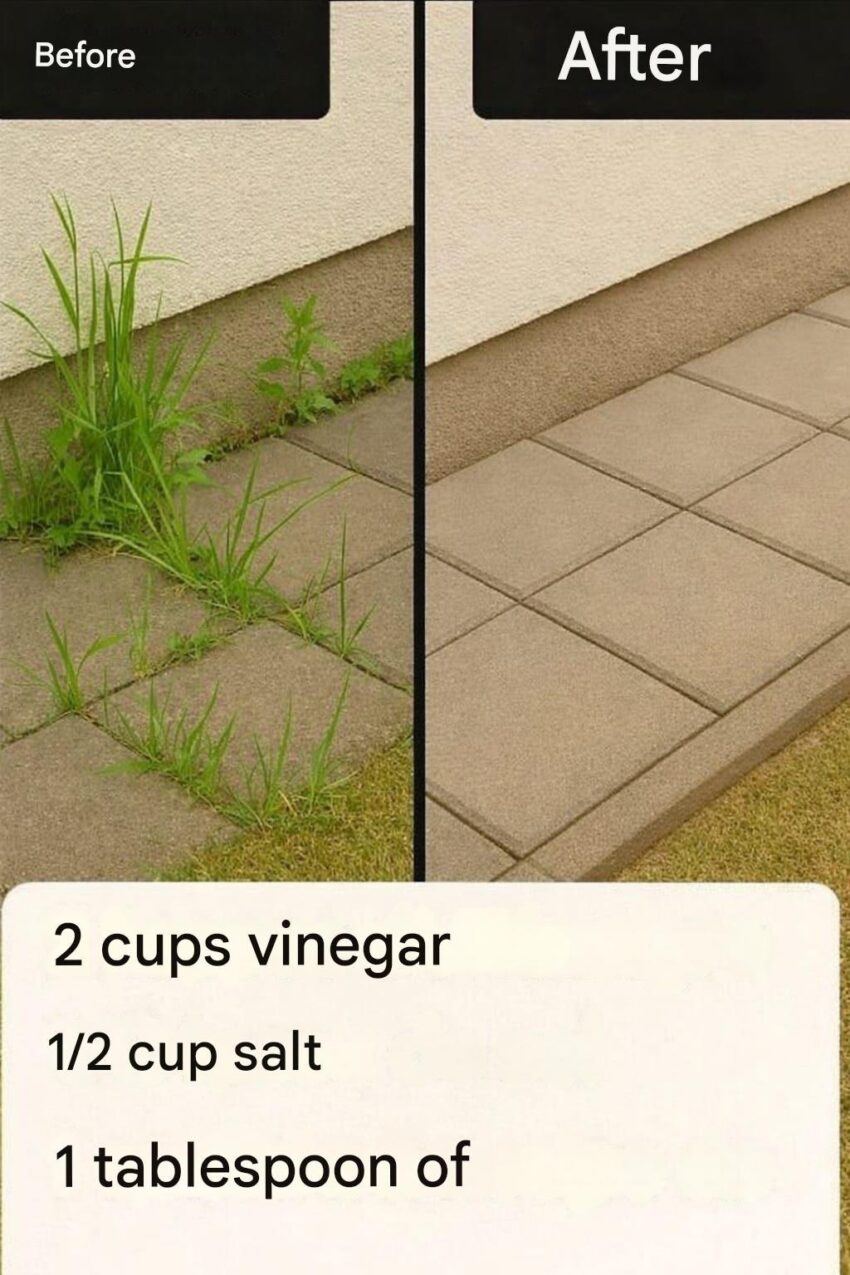
You can make a strong homemade herbicide, but it’s worth saying upfront: “super effective” often means non-selective—it can harm nearby plants and soil life if used carelessly. So the goal is effective + controlled use.
🌿 A Reliable Homemade Herbicide (Vinegar-Based)
Ingredients:
- White vinegar (5–10% acetic acid) – main weed killer
- Salt (table salt) – dries out plants
- Dish soap – helps the solution stick to leaves
Recipe:
- 1 liter vinegar
- 2–3 tablespoons salt
- 1 teaspoon dish soap
Mix until dissolved and pour into a spray bottle.
⚡ How it Works
- Vinegar burns and dehydrates leaves
- Salt pulls moisture out of plant cells
- Soap breaks the leaf’s protective surface so it penetrates better
🌱 How to Use It Properly
- Spray directly on weed leaves (don’t soak soil if you plan to grow there)
- Apply on a hot, sunny day ☀️ for best results
- Avoid windy conditions (to protect nearby plants)
- Reapply after a few days if needed
⚠️ Important Warnings
- This mix is non-selective → it can kill grass, flowers, crops
- Salt can damage soil long-term, making it hard to grow anything there
- Best for:
- Driveways
- Cracks in pavement
- Path edges
🌼 Stronger Natural Alternative (No Salt)
If you want something safer for soil:
- Use vinegar + soap only
- It’s less permanent but won’t ruin the ground
💡 Pro Tips
- For deep-rooted weeds, cut them first, then spray
- Repeat treatments are normal—homemade solutions don’t usually kill roots in one go
- Boiling water is another quick, chemical-free option for small areas
✔️ Bottom Line
A vinegar + salt + soap mix is one of the most effective DIY herbicides, but use it carefully—especially the salt—so you don’t unintentionally damage your soil or nearby plants.
If you want, tell me what weeds you’re dealing with (grass, dandelions, stubborn roots, etc.), and I can tailor a stronger or safer method.
