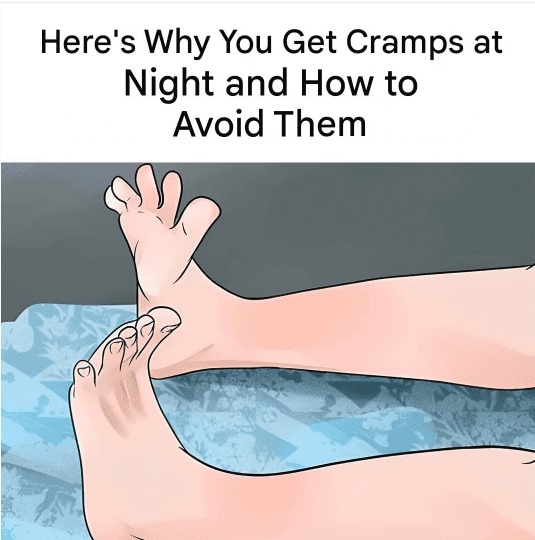
Nighttime cramps—sudden, painful muscle contractions, usually in the calves, thighs, or feet—are very common. They often strike during sleep, and while usually harmless, they can indicate underlying issues. Here’s a full, detailed explanation:
⚡ Why We Get Cramps at Night
1. Muscle Fatigue or Overuse
- Muscles that are overworked during the day, especially calves and thighs, can spasm at night.
- Even minor strain from walking, standing, or exercising can trigger cramps while you’re resting.
2. Dehydration
- Low fluid intake affects electrolytes (sodium, potassium, calcium, magnesium), which are essential for proper muscle contraction and relaxation.
- Even mild dehydration can make muscles more prone to involuntary contractions.
3. Electrolyte Imbalances
- Deficiencies in magnesium, potassium, or calcium can increase cramp frequency.
- Certain medications, like diuretics, can worsen these deficiencies.
4. Poor Circulation
- Conditions such as peripheral artery disease, diabetes, or varicose veins reduce blood flow to the legs.
- Less oxygen and nutrients in the muscles make them more likely to spasm at rest.
5. Nerve Compression
- Nerve issues in the spine (e.g., sciatica or lumbar disc problems) can misfire signals to leg muscles, causing cramps at night.
6. Sleeping Position
- Pointing toes downward or curling up in certain positions can shorten calf muscles, increasing the likelihood of cramps.
7. Age Factor
- People over 50 are more prone because muscle flexibility decreases, circulation slows, and nerves may be more sensitive.
Tips to Reduce Nighttime Cramps
- Stretch before bed – calves, hamstrings, and feet.
- Stay hydrated – drink water consistently throughout the day.
- Maintain electrolyte balance – eat bananas, leafy greens, nuts, and dairy.
- Adjust sleeping positions – avoid pointing toes downward.
- Moderate exercise – don’t overwork muscles late in the day.
- Check medications with your doctor if cramps are frequent.
💡 Bottom Line:
Night cramps are usually caused by muscle fatigue, dehydration, electrolyte imbalance, poor circulation, or nerve issues. Simple changes like stretching, hydration, and proper nutrition can significantly reduce their frequency.
I can also create a 5-minute pre-bed routine to almost eliminate leg cramps—would you like me to do that?
