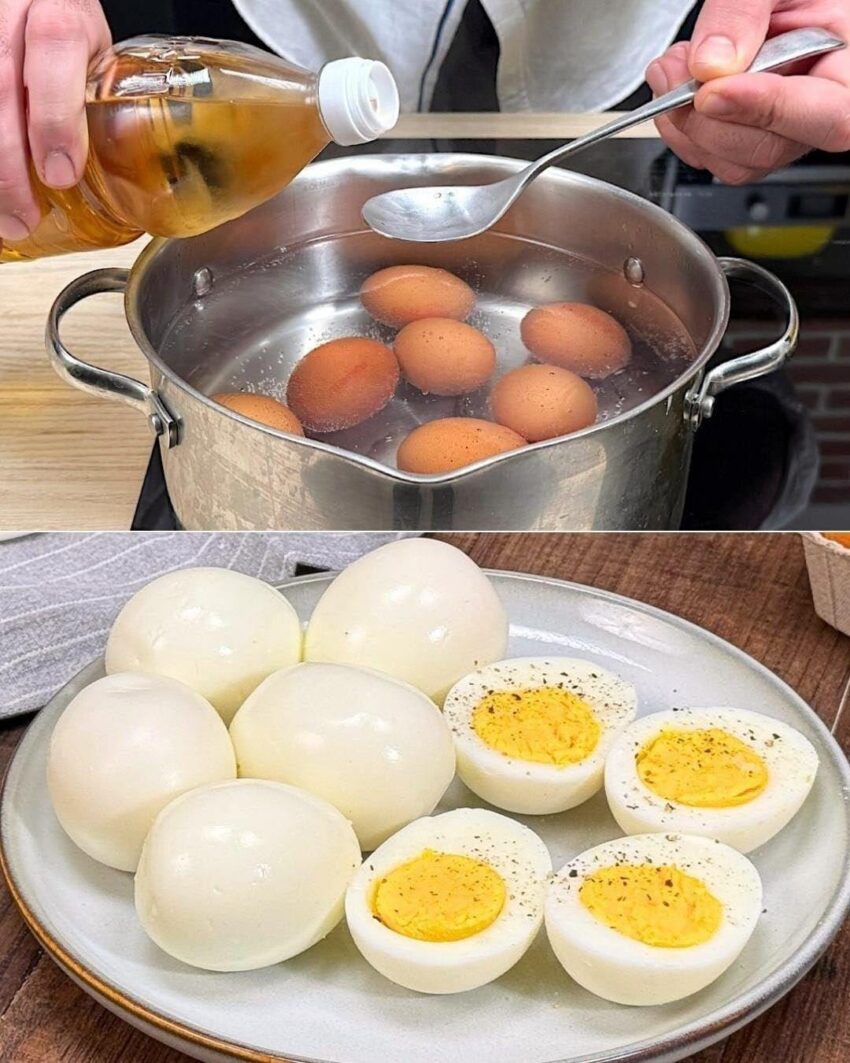
Here’s a detailed guide to perfectly boiled eggs every time, without the frustration of shells sticking or cracked eggs:
🥚 The Trick to Perfectly Boiled Eggs
Common Mistakes to Avoid
- Starting with boiling water
- Adding eggs straight into boiling water can crack the shells.
- ✅ Tip: Start eggs in cold water, then bring to a boil.
- Overcooking the eggs
- Overcooking causes a green ring around the yolk and a sulfur smell.
- ✅ Tip: Once water boils, turn off the heat and cover for 10–12 minutes for large eggs.
- Skipping the ice bath
- Without cooling, eggs continue cooking and are harder to peel.
- ✅ Tip: Transfer eggs immediately to an ice bath for 5–10 minutes.
- Using super fresh eggs
- Fresh eggs are harder to peel because the pH of the egg white is lower.
- ✅ Tip: Use eggs that are 7–10 days old for easy peeling.
- Peeling under running water is optional but helpful
- Water helps separate the membrane from the shell, making peeling easier.
Step-by-Step Method for Perfect Eggs
- Place eggs in a single layer in a pot.
- Cover with cold water, about 1 inch above the eggs.
- Slowly bring to a boil over medium heat.
- Once boiling, turn off the heat, cover, and let sit 10–12 minutes.
- Transfer eggs to an ice bath for at least 5 minutes.
- Crack gently and peel under running water.
✅ Extra Tips
- Add a teaspoon of baking soda to the water to make peeling even easier.
- For soft-boiled eggs, reduce sit time to 6–7 minutes in hot water.
- Store boiled eggs unpeeled in the fridge for up to a week.
💡 Bottom Line
The key to perfectly boiled eggs is gentle cooking, cooling in an ice bath, and using slightly older eggs. Avoid those 5 mistakes, and peeling becomes effortless!
If you want, I can also make a cheat sheet for soft, medium, and hard boiled eggs, with exact times for different egg sizes. Do you want me to do that?
