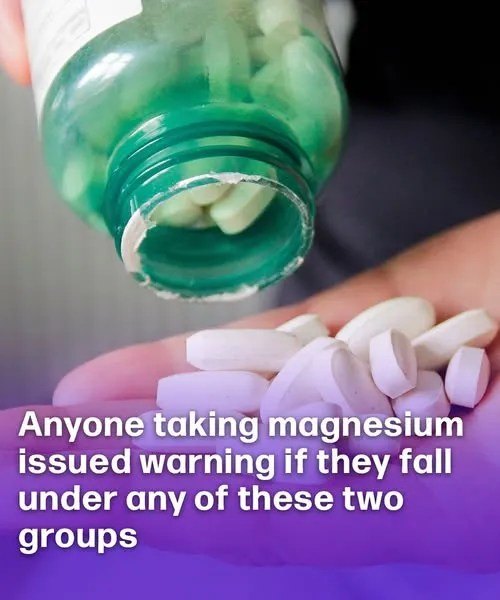
Health experts are increasingly cautioning that while magnesium supplements can be beneficial for some people, they’re not harmless for everyone—and in certain cases they can cause more harm than good if taken without care. Recent reports and expert guidance highlight important warnings, especially for two high‑risk groups: (Alzheimer’s Drug Discovery Foundation)
⚠️ 1. People with Kidney Problems
If your kidneys aren’t working well, magnesium from supplements can build up in your body because the kidneys are responsible for removing excess magnesium.
- In healthy people, excess magnesium from supplements is usually excreted safely in the urine.
- If kidney function is impaired (chronic kidney disease, elderly with reduced renal function), magnesium can accumulate and lead to toxicity.
- Symptoms of too much magnesium include nausea, flushing, irregular heartbeat, muscle weakness, dangerously low blood pressure, and in severe cases, heart rhythm issues. (Alzheimer’s Drug Discovery Foundation)
👉 Message for high‑risk group: Don’t take magnesium supplements without medical advice if you have kidney disease or impaired kidney function.
⚠️ 2. People on Certain Medications
Magnesium supplements can interact with several common medications, changing how they’re absorbed or how effective they are:
- Bisphosphonates (used for osteoporosis) can be less well absorbed if taken too close to magnesium.
- Certain antibiotics may not work as well when taken with magnesium.
- Diuretics, used for blood pressure, can alter magnesium levels in the body, either increasing risk of deficiency or buildup.
- Acid‑reflux drugs (proton pump inhibitors) may also affect magnesium status long‑term. (Office of Dietary Supplements)
👉 Message for high‑risk group: If you’re on prescription medications—especially for bones, blood pressure, infections, or digestion—talk to your doctor before starting magnesium.
🧠 Other Things Experts Want You to Know
- Side effects from too much magnesium can include digestive upset (diarrhea, nausea) even at moderate doses. (Alzheimer’s Drug Discovery Foundation)
- Excessive supplemental magnesium (much higher than recommended) can be dangerous—far above the upper limit—especially without medical supervision. (Office of Dietary Supplements)
- Healthy individuals who get magnesium from food sources rarely have toxicity issues because the body regulates magnesium from food much more effectively than supplements. (Office of Dietary Supplements)
🧾 Bottom Line
Magnesium supplements can help people with deficiency, muscle cramps, or certain health issues—but they’re not risk‑free, particularly if you:
- Have kidney disease or reduced kidney function
- Are taking certain medications that interact with magnesium
Before starting magnesium supplementation, especially in high doses or long‑term, it’s wise to consult a healthcare provider so that you get the benefit without unintended side effects.
If you’d like, I can also share safe magnesium dosage guidelines and the best forms of magnesium supplement based on your goals (e.g., sleep support vs. digestive health). Would you like that?
