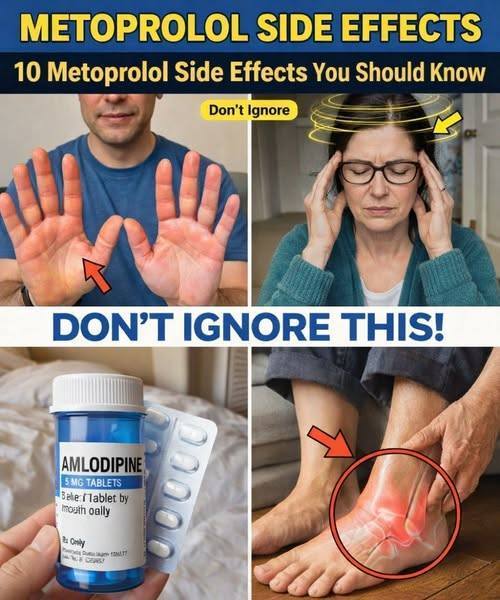
That headline is classic fear-based clickbait. Doctors are not “hiding” side effects of Metoprolol—it’s a widely used, well-studied medication, and its risks are openly documented.
That said, it’s smart to know the real side effects.
💊 What Metoprolol is used for
Metoprolol is a beta-blocker used to treat:
- Hypertension
- Angina
- Heart failure
- Irregular heart rhythms
⚠️ Common side effects (usually mild)
These are the ones doctors expect and monitor:
- Fatigue / tiredness
- Dizziness or lightheadedness
- Slow heart rate (bradycardia)
- Cold hands and feet
- Mild digestive issues (nausea, diarrhea)
👉 These often improve as your body adjusts.
🚨 Less common but important side effects
1. Very slow heart rate
Can lead to weakness or fainting if severe.
2. Low blood pressure
You may feel:
- Dizzy when standing up
- Faint or unsteady
3. Breathing issues
Metoprolol can worsen symptoms in people with:
- Asthma
- Chronic obstructive pulmonary disease
4. Depression or mood changes
Some people report:
- Low mood
- Sleep disturbances
5. Masked low blood sugar
Important for people with Diabetes:
- It can hide symptoms like rapid heartbeat during hypoglycemia
6. Sexual side effects
- Reduced libido
- Erectile dysfunction (in some cases)
7. Cold extremities & circulation issues
Due to reduced blood flow to hands/feet
⛔ Important warning
Never stop Metoprolol suddenly.
Doing so can trigger:
- Rebound high blood pressure
- Chest pain
- Even heart attack in high-risk patients
✅ Bottom line
➡️ Metoprolol is generally safe and effective when used correctly
➡️ Side effects exist—but they’re well-known, not hidden
➡️ Most people tolerate it well under medical supervision
If you’re taking it and noticing symptoms, I can help you figure out what’s normal vs. when to contact your doctor.
