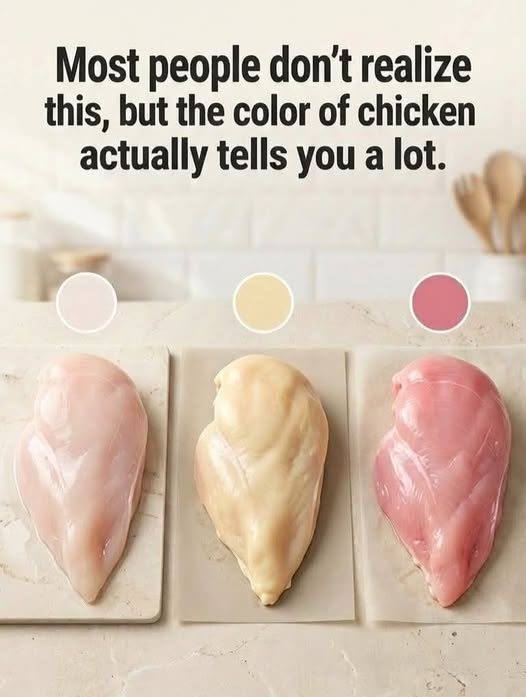
Here’s a clear, science-backed guide about chicken color and what it actually reveals about quality, freshness, and safety:
1. Raw Chicken Color
- Healthy raw chicken is usually pale pink or light yellow.
- Yellowish fat is normal in corn-fed or pasture-raised chickens.
- Gray, green, or slimy areas are warning signs of spoilage.
2. Cooked Chicken Color
- Properly cooked chicken should be white or light tan throughout.
- Slight pink near bones can happen in young chickens, but the internal temperature must reach 165°F / 74°C for safety.
- Bright red or raw-looking meat after cooking is unsafe.
3. What Chicken Color Depends On
- Diet: Corn-fed chickens → yellower fat; free-range → lighter skin.
- Age & Breed: Younger birds → paler meat; older birds → slightly darker meat.
- Storage & Packaging: Thawed or frozen chicken may have slight color changes—check smell and texture too.
4. Signs Your Chicken May Be Spoiled
- Off or sour odor
- Slimy or sticky texture
- Gray, green, or discolored patches
Tip: Color alone is not enough—always check smell, texture, and sell-by date.
5. Quick Safety Checklist
| Check | What to Look For |
|---|---|
| Raw meat | Pale pink/light yellow; no gray/green patches |
| Fat | Slightly yellow is fine |
| Smell | Neutral or meaty; sour or ammonia-like = bad |
| Texture | Firm and moist; sticky/slimy = bad |
| Cooked meat | White/light tan; internal temp ≥165°F / 74°C |
💡 Bottom Line:
Chicken color varies naturally with diet, breed, and age. Gray, green, or slimy meat is unsafe. Always rely on smell, texture, and cooking temperature as the best indicators of quality.
I can also make a visual “Chicken Freshness Guide” showing raw vs cooked color, texture, and spoilage signs for quick reference.
Do you want me to create that?
