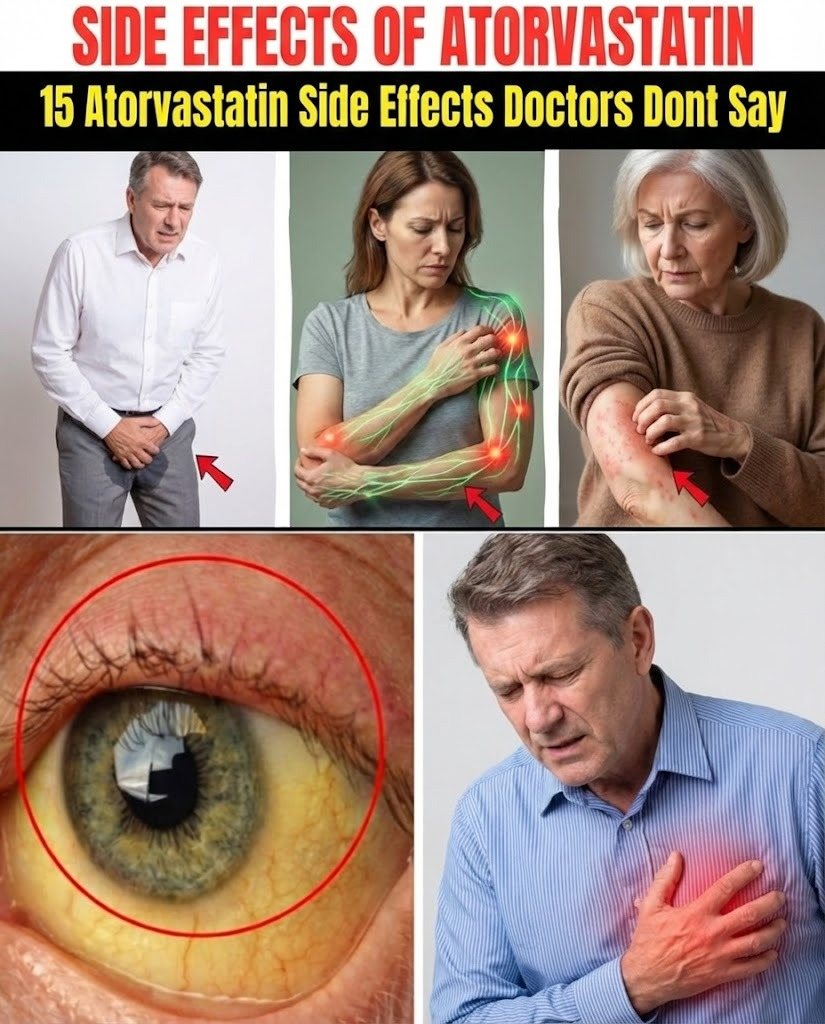
Headlines like that are designed to scare more than inform. Atorvastatin is one of the most widely prescribed medications for lowering cholesterol and preventing heart attacks and strokes—and for most people, it’s safe and effective.
That said, like any medication, it can have side effects. Here’s a clear, honest breakdown—without the exaggeration:
⚠️ Possible Side Effects of Atorvastatin
🟡 Common (usually mild)
- Muscle aches or soreness
- Joint pain
- Digestive issues (nausea, diarrhea, constipation)
- Headache
- Fatigue
🟠 Less Common (monitor and discuss with doctor)
- Elevated liver enzymes (usually found on blood tests)
- Sleep disturbances
- Memory issues or brain fog (rare and often reversible)
- Increased blood sugar levels (may slightly raise risk of Type 2 Diabetes)
🔴 Rare but Serious (seek medical help)
- Severe muscle damage (rhabdomyolysis) – extreme muscle pain, dark urine
- Liver injury – yellowing of skin/eyes, dark urine
- Severe allergic reactions – swelling, rash, breathing difficulty
🧠 The Truth Behind “Hidden Dangers”
- These side effects are not hidden—they’re well-documented and monitored.
- Serious complications are rare, especially at standard doses.
- Doctors prescribe atorvastatin because its benefits in preventing heart attacks and strokes usually far outweigh the risks.
💡 What You Should Do
- Don’t stop the medication suddenly without medical advice
- Report unusual muscle pain, weakness, or fatigue
- Get regular blood tests (liver function, cholesterol)
- Ask your doctor about dose adjustments if side effects occur
🧾 Bottom Line
Atorvastatin doesn’t secretly cause 15 hidden dangers—but like any drug, it has possible side effects that should be monitored. For most people, it’s a life-saving medication, not a hidden risk.
If you want, I can compare atorvastatin vs. natural ways to lower cholesterol so you understand when medication is truly necessary and when lifestyle changes might be enough.
