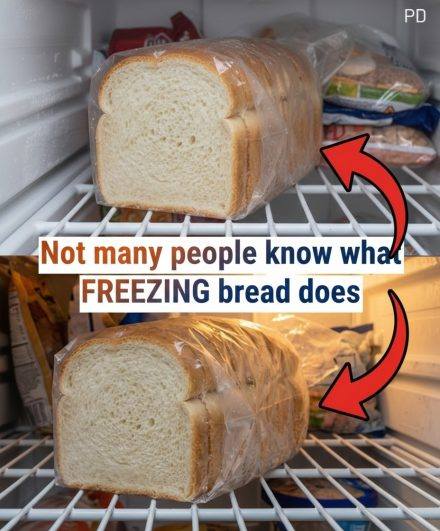
Freezing bread is a common trick to extend its shelf life, but it also affects texture, moisture, and taste in some subtle ways. Here’s what really happens when you put bread in the freezer:
1. Freezing Stops Mold Growth
- Bread goes stale or moldy quickly at room temperature because of moisture and airborne spores.
- Freezing halts mold growth and bacterial activity, keeping bread safe for months.
2. Water Crystals Form
- When bread freezes, the water inside turns into ice crystals.
- Large crystals can puncture the starch and gluten network, which may slightly change the texture when thawed.
3. Slows Staling
- Staling is caused by starch retrogradation (starch molecules crystallizing over time).
- Freezing slows this process but doesn’t stop it completely. Bread can still taste slightly firmer after a few weeks.
4. Thawing Can Restore Softness
- Thaw bread at room temperature or lightly toast it to regain softness.
- Avoid microwaving too long; it can make bread chewy or rubbery.
5. Taste and Nutrients Remain Mostly Intact
- Freezing doesn’t significantly affect flavor or nutritional value, so it’s a safe way to store bread for later use.
💡 Pro Tip:
- Slice bread before freezing so you can take out only what you need.
- Wrap tightly in plastic wrap or a freezer bag to prevent freezer burn.
If you want, I can give a hack that makes thawed bread taste just-baked, almost like it never left the bakery. Do you want me to share that?
