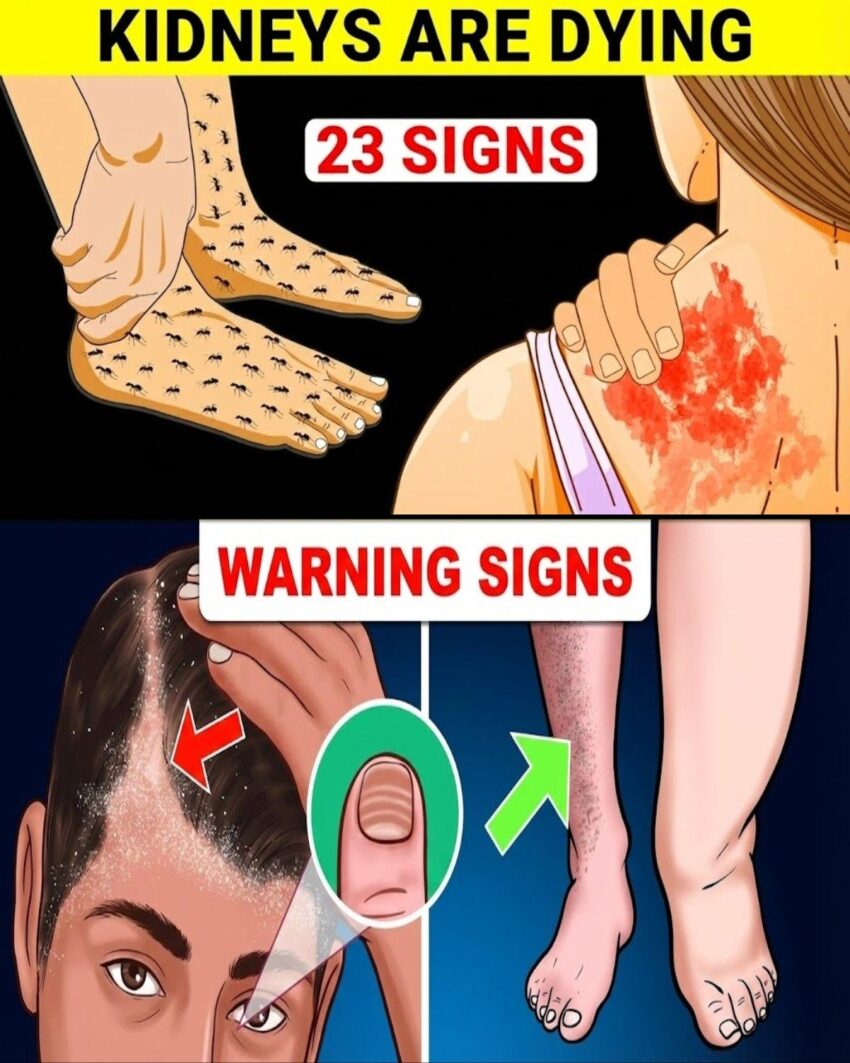
Here’s a detailed guide on 23 subtle and often overlooked signs of kidney disease. Many of these are easy to miss because they appear gradually or seem unrelated.
🩺 23 Weird Signs of Kidney Disease Most People Miss
Kidneys filter waste and maintain fluid, electrolyte, and blood pressure balance. When they aren’t functioning properly, symptoms can appear in unexpected areas of the body.
1–5: Changes in Urination
- Foamy or bubbly urine – indicates protein in urine.
- Dark-colored urine – may signal blood or toxins.
- Frequent urination at night – kidneys struggle to concentrate urine.
- Decreased urine output – late-stage kidney issues.
- Pain or burning while urinating – may accompany infections that stress kidneys.
6–10: Swelling and Fluid Retention
- Swollen ankles, feet, or hands – fluid buildup due to poor filtration.
- Puffy eyes, especially in the morning – protein leakage causes swelling.
- Sudden weight gain from fluid retention.
- Abdominal bloating or puffiness – fluid can accumulate in the belly.
- Swollen fingers or stiff joints – fluid imbalance affects tissues.
11–15: Skin and Hair Changes
- Itchy, dry skin – toxins build up in the blood.
- Rashes or hives – inflammation caused by waste accumulation.
- Hair loss – nutrient imbalances from impaired kidney function.
- Pale or yellowish skin – anemia caused by reduced erythropoietin.
- Changes in nail color or texture – weak nails may indicate chronic kidney disease.
16–20: Digestive and Neurological Signs
- Loss of appetite – due to toxin buildup.
- Nausea or vomiting – early kidney stress often affects digestion.
- Metallic taste in mouth or bad breath – caused by uremia.
- Headaches or difficulty concentrating – buildup of waste affects the brain.
- Muscle cramps or twitching – electrolyte imbalance, especially low calcium.
21–23: Cardiovascular and Other Subtle Clues
- High blood pressure – kidney dysfunction affects fluid and salt balance.
- Shortness of breath – fluid buildup in lungs or anemia.
- Cold intolerance or feeling weak – related to anemia and reduced oxygen transport.
🟢 Key Takeaways
- Many early kidney disease signs are silent or nonspecific, which is why regular checkups are crucial.
- Blood tests like creatinine, BUN, eGFR, and urine tests can detect problems before severe symptoms appear.
- Lifestyle measures—hydration, diet control, managing diabetes or hypertension, and avoiding nephrotoxic drugs—support kidney health.
🟢 Bottom Line
Kidney disease often shows up in unexpected ways, from foamy urine to itchy skin or fatigue. Paying attention to subtle symptoms and early testing can prevent serious complications.
I can also create a visual checklist of all 23 signs for easy home reference to spot kidney problems early.
Do you want me to make that checklist?
