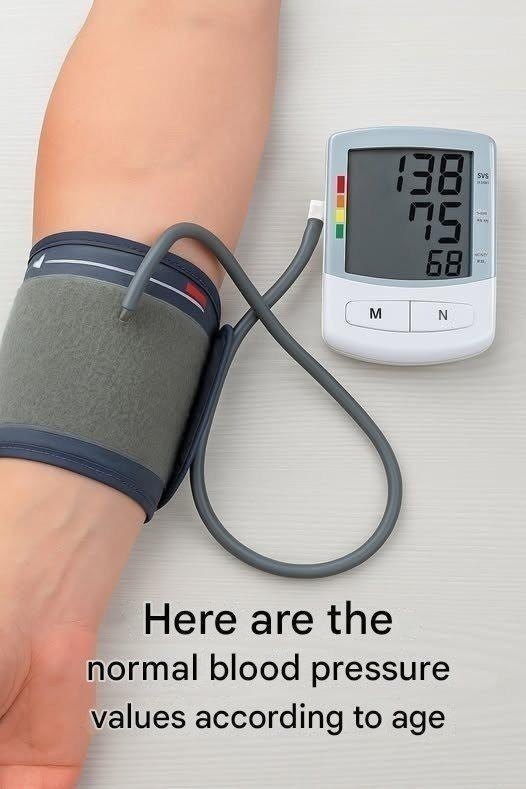
Blood pressure doesn’t change dramatically with age as many viral posts suggest—but what’s considered “normal” can vary slightly depending on health status. Here’s a clear, medically accurate guide:
🩺 Standard Blood Pressure Categories (Adults)
| Category | Systolic (Top) | Diastolic (Bottom) |
|---|---|---|
| Normal | Less than 120 | Less than 80 |
| Elevated | 120–129 | Less than 80 |
| High (Stage 1) | 130–139 | 80–89 |
| High (Stage 2) | 140+ | 90+ |
👉 These ranges apply to most adults, regardless of age.
📊 Blood Pressure by Age (General Trends)
18–39 years
- Typical: 110–120 / 70–80
- Higher readings may indicate early hypertension
40–59 years
- Typical: 115–130 / 75–85
- Slight increase due to vessel stiffness
60+ years
- Acceptable: 120–140 / 70–90
- Doctors may allow slightly higher systolic values depending on overall health
⚠️ Important Truth Most People Miss
- High blood pressure is NOT “normal” just because you’re older
- It’s still a major risk factor for:
- Heart disease
- Stroke
- Kidney damage
🚨 When to Be Concerned
- Readings consistently above 130/80
- Sudden spikes (e.g., 160+)
- Symptoms like headaches, dizziness, or chest pain
👉 Severe elevations can increase risk of Stroke or heart attack.
💡 Tips to Maintain Healthy Blood Pressure
- Reduce salt intake
- Stay physically active
- Maintain a healthy weight
- Manage stress
- Take medications as prescribed
✅ Key Takeaway
While blood pressure may rise slightly with age, healthy targets remain close to under 120/80 for most people. Age is not an excuse to ignore high readings.
If you want, I can create a personal blood pressure tracker chart based on your age and lifestyle to help you monitor it easily at home.
