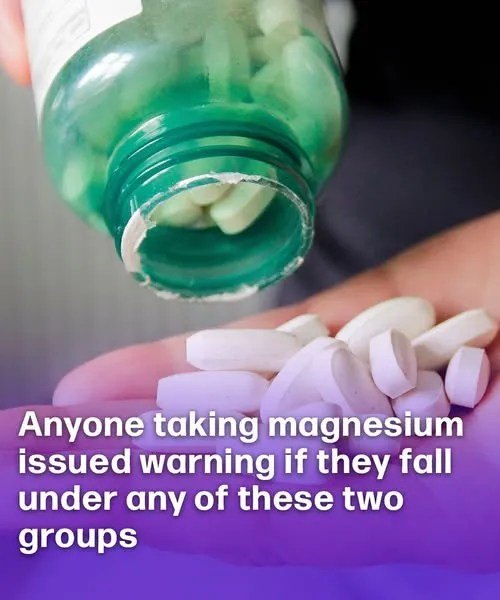
Health experts are lately issuing warnings about magnesium supplements, especially for people in certain high‑risk groups, because too much supplemental magnesium — beyond what your body needs — can cause harm rather than help. (Verywell Health)
⚠️ What’s the concern?
Magnesium is an essential mineral, but the tolerable upper intake level (UL) from supplements is around 350 mg per day for most adults — and exceeding that can lead to side effects and, in serious cases, toxicity. (WebMD)
While food sources of magnesium don’t pose this risk, supplements can lead to excess levels that the body may struggle to clear, especially in people whose kidneys don’t work well. (WebMD)
🧠 2 High‑Risk Groups Who Should Be Careful
Health professionals are particularly cautious about magnesium supplements for these two groups:
1. 🫁 People with Kidney Problems
- The kidneys normally filter out excess magnesium.
- If kidney function is impaired (chronic kidney disease or reduced renal function), magnesium can build up to dangerous levels.
- Excess magnesium (called hypermagnesemia) can cause weakness, very low blood pressure, irregular heartbeats, confusion, and breathing issues in severe cases. (WebMD)
- This risk is higher with supplemental magnesium, not magnesium from food.
👉 Why it matters: With reduced kidney function, even standard supplement doses can lead to accumulation over time.
2. 👵 Older Adults (especially 70+) or Those With Multiple Health Issues
- Aging naturally reduces kidney filtering efficiency, even in people without diagnosed kidney disease. (Office of Dietary Supplements)
- Older adults are also more likely to be taking medications (like blood pressure medicines, antibiotics, or laxatives) that can interact with magnesium supplements or influence electrolyte balance. (WebMD)
- Because aging increases vulnerability to both deficiency and overload, cautious use under medical supervision is advised.
🩺 Other People Who Should Also Be Careful
Even if you’re not in the two high‑risk groups above, you may want to talk to a doctor before taking magnesium supplements if you:
- Take multiple medications that can interact with magnesium
- Have heart disease or blood pressure issues
- Are taking other supplements that could overlap or increase total magnesium intake (WebMD)
🧾 Symptoms of Too Much Magnesium (Know the Signs)
Taking too much supplemental magnesium can cause:
- Diarrhea and nausea
- Stomach cramps
- Muscle weakness
- Very low blood pressure
- Confusion or drowsiness (in severe cases) (ScienceInsights)
If you notice these symptoms after starting magnesium supplements, discontinue use and consult a healthcare provider.
✅ Bottom Line
✔ Magnesium from food is safe for almost everyone.
✔ Supplemental magnesium can be risky if taken too much — especially for people with reduced kidney function or older adults.
✔ Always consult a healthcare professional before starting supplements, especially if you’re in one of those high‑risk groups. (Verywell Health)
Would you like me to summarize how to use magnesium safely, including ideal doses and food sources to meet your needs without supplements?
