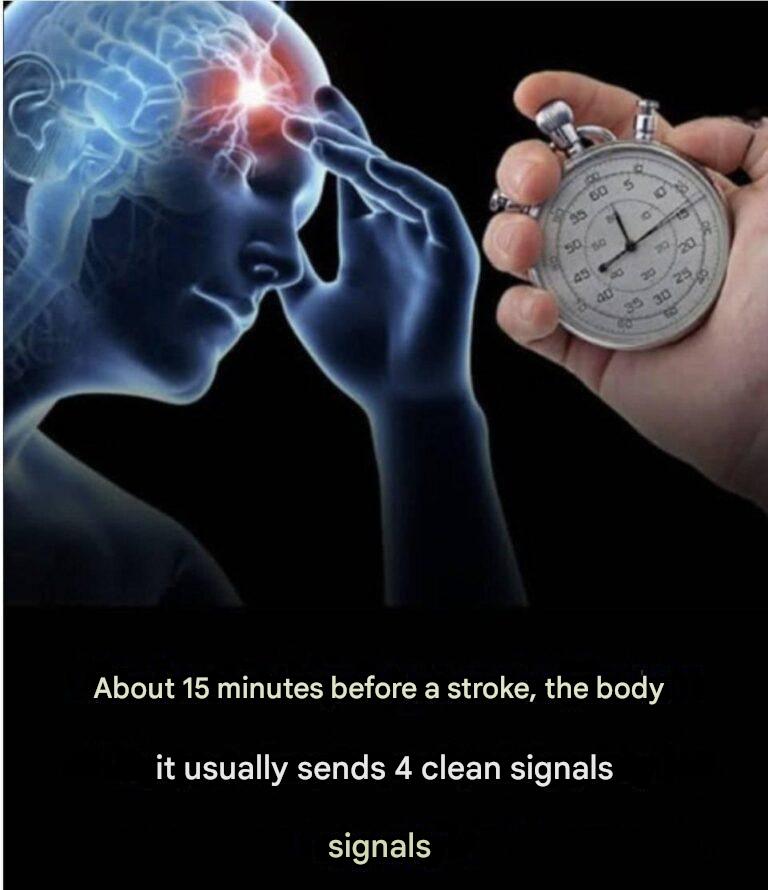
That claim is misleading.
A stroke does not reliably give a 15-minute warning with specific signals. Sometimes symptoms appear suddenly with no warning at all—which is why quick recognition is critical.
⚠️ What Actually Happens Before a Stroke
- Many strokes occur abruptly.
- Some people may have earlier warning events called Transient ischemic attack (TIAs)—but these can happen days or weeks before, not just 15 minutes.
- TIAs are a major red flag and require urgent medical attention.
🚨 4 Real Stroke Warning Signs (Can Happen Suddenly)
Instead of a fixed “15-minute rule,” doctors focus on these immediate symptoms:
1. Face Drooping
- One side of the face may sag or feel numb
- Smile appears uneven
2. Arm Weakness
- Sudden weakness or numbness in one arm (or leg)
- Difficulty lifting or holding it up
3. Speech Problems
- Slurred speech or trouble speaking/understanding
- Words may come out confused
4. Sudden Vision or Balance Issues
- Blurred or lost vision in one or both eyes
- Dizziness, loss of coordination, or trouble walking
🧠 Use the FAST Rule
- Face drooping
- Arm weakness
- Speech difficulty
- Time to call emergency services immediately
⚠️ Why Immediate Action Matters
- A stroke is a medical emergency
- Treatment within the first hours can prevent brain damage or death
- Waiting—even minutes—can worsen outcomes
💡 Bottom Line
- There’s no guaranteed 15-minute early warning
- Stroke symptoms usually appear suddenly
- Recognizing FAST signs and acting quickly saves lives
If you want, I can make a simple visual checklist you can remember instantly in an emergency.
