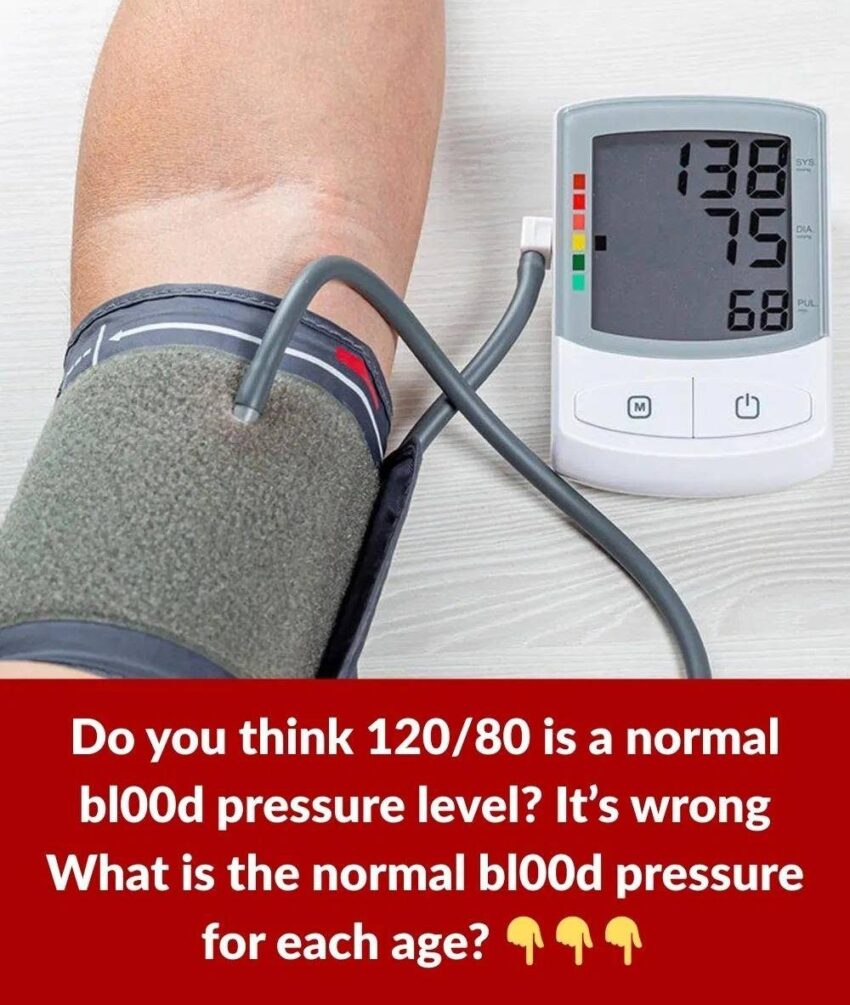
That headline is a bit misleading—there isn’t a completely different “normal” blood pressure for every age. Doctors actually use similar targets for most adults, with slight flexibility for older people.
Here’s a clear, medically accurate guide 👇
❤️ What Is Normal Blood Pressure?
Blood pressure is written as:
- Systolic (top number) / Diastolic (bottom number)
✅ General Adult Range
- Normal: below 120/80 mmHg
- Elevated: 120–129 / below 80
- High (Hypertension): 130/80 or higher
📊 Blood Pressure by Age (Practical Guide)
👶 Children (6–12 years)
- Around 95–110 / 60–75
- Varies by height and development
🧑 Teens (13–18 years)
- About 110–120 / 65–80
- Similar to adults by late teens
👨🦱 Adults (19–59 years)
- Ideal: <120/80
- Doctors begin monitoring closely above 130/80
👴 Older Adults (60+)
- Target often: below 130–140 / 80–90
- Slightly higher may be acceptable depending on health and medications
⚠️ Common Mistake People Make
Many believe:
👉 “Higher blood pressure is normal as you age”
That’s not entirely true. While it tends to rise with age, high blood pressure is still risky, increasing chances of:
- Stroke
- Heart disease
- Kidney problems
🧠 Important Tip
Consistency matters more than one reading:
- Measure at the same time each day
- Sit calmly for 5 minutes before checking
- Avoid caffeine or stress beforehand
🚨 When to Be Concerned
- Readings consistently above 130/80
- Symptoms like headaches, dizziness, or chest pain
✅ Bottom Line
- The “normal” target is roughly the same for most adults
- Aging doesn’t make high blood pressure safe—it just makes it more common
- Keeping it under control is key to long-term health
If you want, I can help you interpret your own blood pressure readings or create a simple daily routine to keep it in a healthy range.
