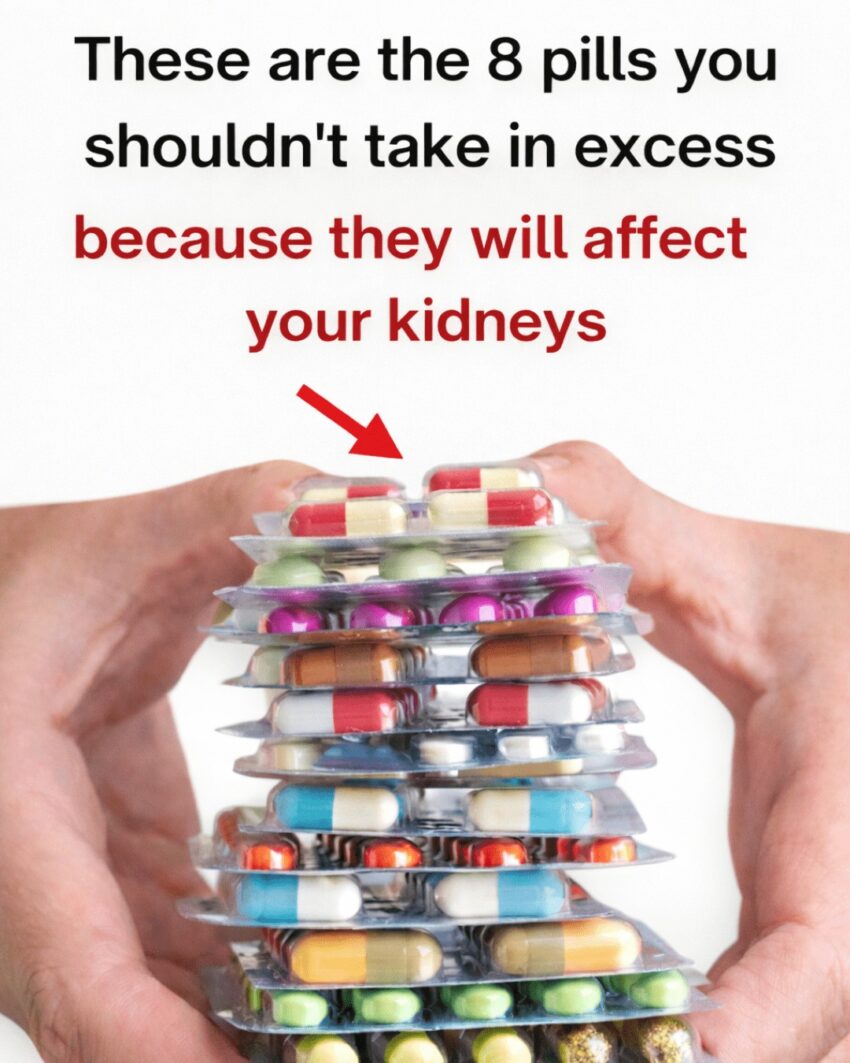
That headline has a point—your kidneys are sensitive to certain medications, especially when they’re overused, combined incorrectly, or taken without medical guidance. But it’s not about fear—it’s about using medicines safely.
Here’s a clear, evidence-based breakdown 👇
⚠️ 8 Common Medications That Can Affect Your Kidneys
1️⃣ NSAIDs (Painkillers)
- Examples: ibuprofen, diclofenac, naproxen
- Can reduce blood flow to the kidneys → risk of damage with long-term use
2️⃣ Certain Antibiotics
- Some types (like aminoglycosides) can be toxic to kidney tissue
- Risk increases with high doses or prolonged use
3️⃣ Proton Pump Inhibitors (PPIs)
- Used for acid reflux
- Long-term use has been linked to kidney issues like inflammation
4️⃣ Diuretics (“Water Pills”)
- Used for blood pressure or swelling
- Can cause dehydration and electrolyte imbalance, stressing kidneys
5️⃣ ACE Inhibitors & ARBs
- Used for blood pressure and heart conditions
- Usually protective long-term, but can affect kidney function initially, especially if dehydrated
6️⃣ Contrast Dyes (Used in Scans)
- Used in CT scans or angiography
- Can cause temporary kidney injury in high-risk individuals
7️⃣ Lithium
- Used for mood disorders
- Long-term use may lead to chronic kidney damage
8️⃣ Some Herbal Supplements
- Not always safe—some contain harmful compounds or heavy metals
- Can cause hidden kidney toxicity
⚠️ Why Self-Medicating Is Dangerous
Self-medication increases the risk of:
- ❌ Wrong dosage
- ❌ Drug interactions
- ❌ Taking medicines too long
- ❌ Ignoring early warning signs
👉 This can lead to serious conditions like acute kidney injury or even chronic kidney disease
🚨 Warning Signs of Kidney Problems
- Swelling in feet or ankles
- Decreased or foamy urine
- Fatigue or weakness
- Nausea or loss of appetite
✅ How to Protect Your Kidneys
- Take medications only as prescribed
- Stay well hydrated
- Avoid long-term use of painkillers without supervision
- Get regular kidney function tests if on long-term meds
🧾 Bottom Line
Some common medications can stress or damage the kidneys, especially when misused.
The real danger isn’t the medicine itself—it’s unsupervised or excessive use.
If you want, I can make a “kidney-safe medication checklist” so you can quickly know what’s safe and what needs caution.
