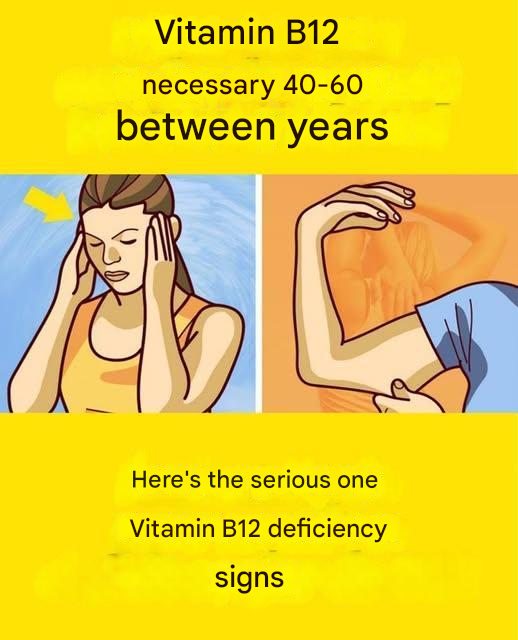
Vitamin B12 is crucial for nerve health, red blood cell production, and DNA synthesis, and its importance grows as we age. Between ages 40 and 60, many people start to experience absorption issues, making deficiency more likely. Here’s a detailed look at symptoms indicating serious vitamin B12 deficiency:
Why B12 Matters
- Supports nervous system function → protects nerves and brain health
- Helps produce healthy red blood cells → prevents anemia
- Supports energy metabolism → converts food into energy
- Essential for cognitive function → memory, focus, and mood regulation
Symptoms of Vitamin B12 Deficiency
1. Fatigue and Weakness
- Low B12 can reduce red blood cell production → less oxygen delivered to tissues → persistent tiredness.
2. Tingling or Numbness in Hands and Feet (Peripheral Neuropathy)
- Nerve damage from B12 deficiency can cause pins-and-needles sensations, burning, or numbness.
3. Cognitive Changes
- Memory lapses, difficulty concentrating, or “brain fog.”
- Severe deficiency can mimic early dementia symptoms.
4. Mood Changes
- Irritability, anxiety, depression, or mood swings due to impaired neurotransmitter function.
5. Glossitis and Mouth Ulcers
- Swollen, red, or painful tongue; sometimes accompanied by mouth ulcers.
6. Shortness of Breath or Dizziness
- Anemia from B12 deficiency → oxygen shortage → lightheadedness and breathlessness.
7. Pale or Jaundiced Skin
- Reduced red blood cell production or breakdown of cells can make skin pale or slightly yellow.
8. Vision Problems
- Damage to the optic nerve can cause blurred or disturbed vision.
9. Heart Palpitations
- Anemia or oxygen shortage can cause irregular heartbeat or palpitations.
Causes of B12 Deficiency in 40–60 Age Group
- Poor absorption: Age-related decline in stomach acid → B12 from food harder to absorb
- Dietary deficiency: Strict vegetarian or vegan diets
- Medication effects: Long-term use of proton pump inhibitors, metformin, or other drugs affecting absorption
- Medical conditions: Pernicious anemia, Crohn’s disease, or celiac disease
What to Do
- Get Tested: Blood tests can check B12 levels and methylmalonic acid (MMA) for early deficiency.
- Dietary Sources:
- Meat, fish, eggs, dairy products
- Fortified cereals or plant-based milks if vegan
- Supplements:
- Oral B12 tablets or sublingual drops
- Injections for severe deficiency (prescribed by a doctor)
- Monitor Symptoms: Keep track of fatigue, tingling, mood, and cognitive changes.
💡 Tip: B12 deficiency develops gradually. Early detection is key because nerve damage can become permanent if untreated.
I can make a “Vitamin B12 Deficiency Symptom Tracker for Ages 40–60” that helps identify warning signs early and shows which foods or supplements can correct the deficiency.
Do you want me to make that tracker?
