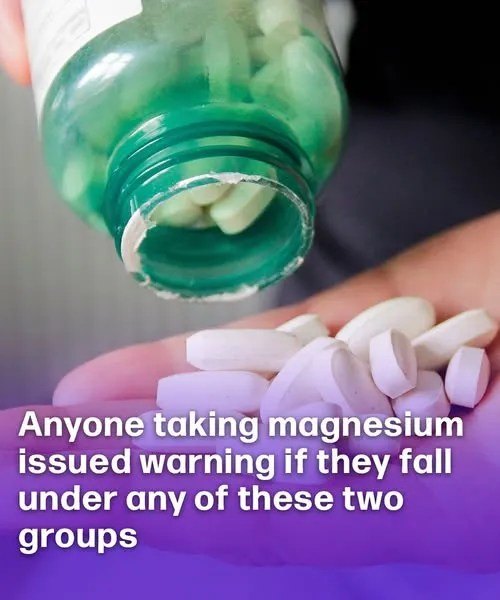
Health experts have recently been warning people to be more cautious about magnesium supplements—especially since many take them thinking “more is better” without knowing the risks. While magnesium can be beneficial when you need it, supplementing without a clear reason or proper guidance can be harmful for some people. (Verywell Health)
Here’s what you should know:
⚠️ Why Experts Are Issuing New Warnings About Magnesium Supplements
Magnesium is essential for many body functions, but too much from supplements—not food—can cause problems. Some people are at much higher risk of adverse effects, even at typical doses. (WebMD)
🧠 1. People With Kidney Problems (High‑Risk Group #1)
- Your kidneys are responsible for clearing excess magnesium from the bloodstream.
- If your kidneys don’t work well—such as with chronic kidney disease—magnesium can build up to dangerous levels.
- This can lead to hypermagnesemia, which may cause weakness, confusion, low blood pressure, slowed breathing, and even serious heart problems. (ScienceInsights)
👉 If you have any kidney condition, talk to your doctor before taking magnesium supplements.
❤️ 2. People on Certain Medications or With Heart Conditions (High‑Risk Group #2)
Magnesium supplements can interact with a variety of drugs and medical conditions: (WebMD)
- Blood pressure medications and some heart rhythm drugs – Magnesium can lower blood pressure too much or interfere with how these medicines work.
- Antibiotics or diuretics (“water pills”) – Magnesium may reduce drug effectiveness or raise magnesium levels too high when combined.
- Muscle relaxants – Magnesium boosts their effect, potentially causing excessive muscle relaxation or breathing issues.
👉 If you’re on prescription meds or have heart issues, consult your doctor first.
🧪 What Else Experts Warn About
✔️ Not everyone needs a supplement: Most people get enough magnesium from food like nuts, seeds, greens, and whole grains. (Office of Dietary Supplements)
✔️ Too much magnesium from supplements can cause:
- Diarrhea, nausea, cramps
- Low blood pressure or dizziness
- Irregular heartbeat and serious toxicity at very high doses (WebMD)
✔️ Recommended upper limit: Generally about 350 mg/day from supplements for adults—unless your doctor advises otherwise. (Office of Dietary Supplements)
🧠 Bottom Line
🔹 Magnesium food sources are safe for almost everyone.
🔹 Supplements should be used with caution, especially by people with:
1️⃣ Kidney disease or reduced kidney function
2️⃣ Heart conditions or those taking certain medications
👉 Always talk to a healthcare provider before starting magnesium supplements, especially if you fall into a high‑risk group. (Verywell Health)
If you’d like, I can show you a safe dosage chart for magnesium and explain which forms are easier on the stomach and less likely to cause side effects—just let me know!
