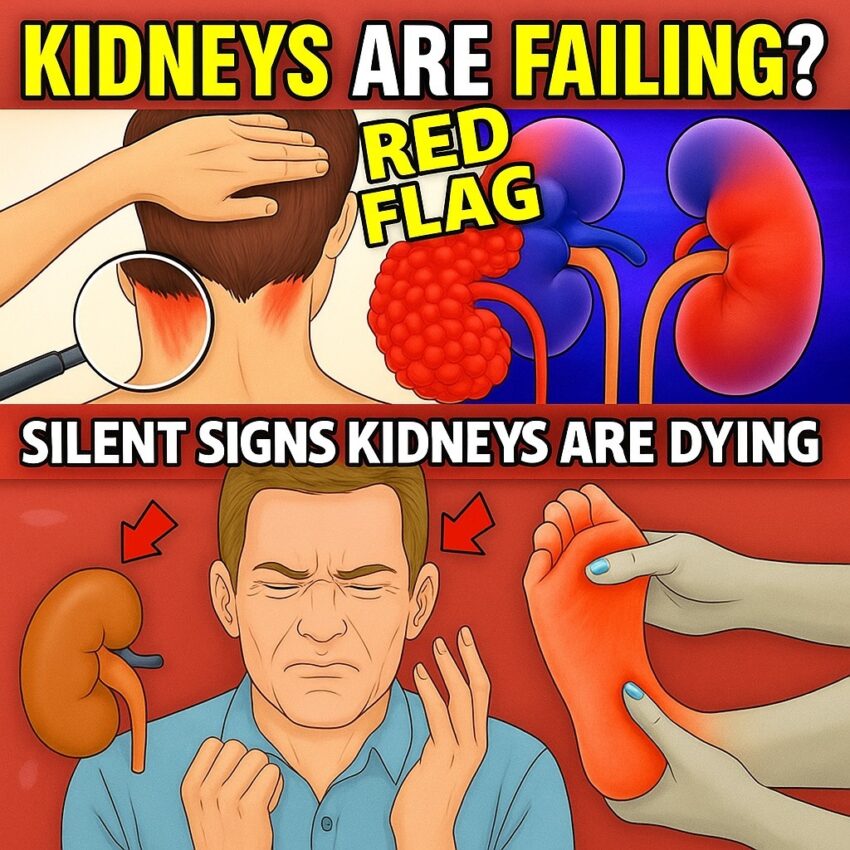
That headline is another fear-based clickbait style claim. Kidney disease does have early signs, but they are not usually “silent mysterious clues” that suddenly mean failure—they develop gradually and often overlap with other conditions.
Here’s a clear, medically accurate breakdown:
🫘 First: What “kidney failure” actually means
Chronic Kidney Disease happens when kidneys slowly lose their ability to:
- filter waste from the blood
- balance fluids and electrolytes
- control blood pressure
Early stages often have no obvious symptoms, which is why lab tests matter more than “sign spotting.”
⚠️ Real warning signs (not clickbait, but non-specific)
These can appear as kidney function worsens, but they are not unique to kidneys:
1. Fatigue and weakness
Due to toxin buildup or anemia.
2. Swelling (feet, ankles, face)
From fluid retention.
3. Changes in urination
- more or less urine
- foamy urine (protein loss)
- waking at night to urinate
4. Loss of appetite
Feeling full or nauseous.
5. Nausea or vomiting
Especially in later stages.
6. Itchy skin
Due to waste buildup in blood.
7. Muscle cramps
From electrolyte imbalance.
8. Trouble concentrating
“Brain fog” from toxin buildup.
❗ Important reality check
These symptoms can also be caused by:
- dehydration
- diabetes
- anemia
- thyroid issues
- infections
- stress or poor sleep
So symptoms alone cannot diagnose kidney failure.
🧪 What actually detects kidney disease early
Doctors rely on simple tests:
- Blood creatinine / eGFR
- Urine albumin (protein leakage)
- Blood pressure monitoring
These detect problems long before symptoms appear.
🚨 When to get checked urgently
- persistent swelling
- very foamy urine
- blood in urine
- long-term fatigue with risk factors (diabetes, hypertension)
✔️ Bottom line
Kidney disease is often quiet in early stages, but it is not “mysterious hidden signs you must decode.” Reliable diagnosis comes from medical testing, not symptom lists on social media.
If you want, I can give you a simple kidney health checklist (diet + habits) that actually helps reduce risk.
