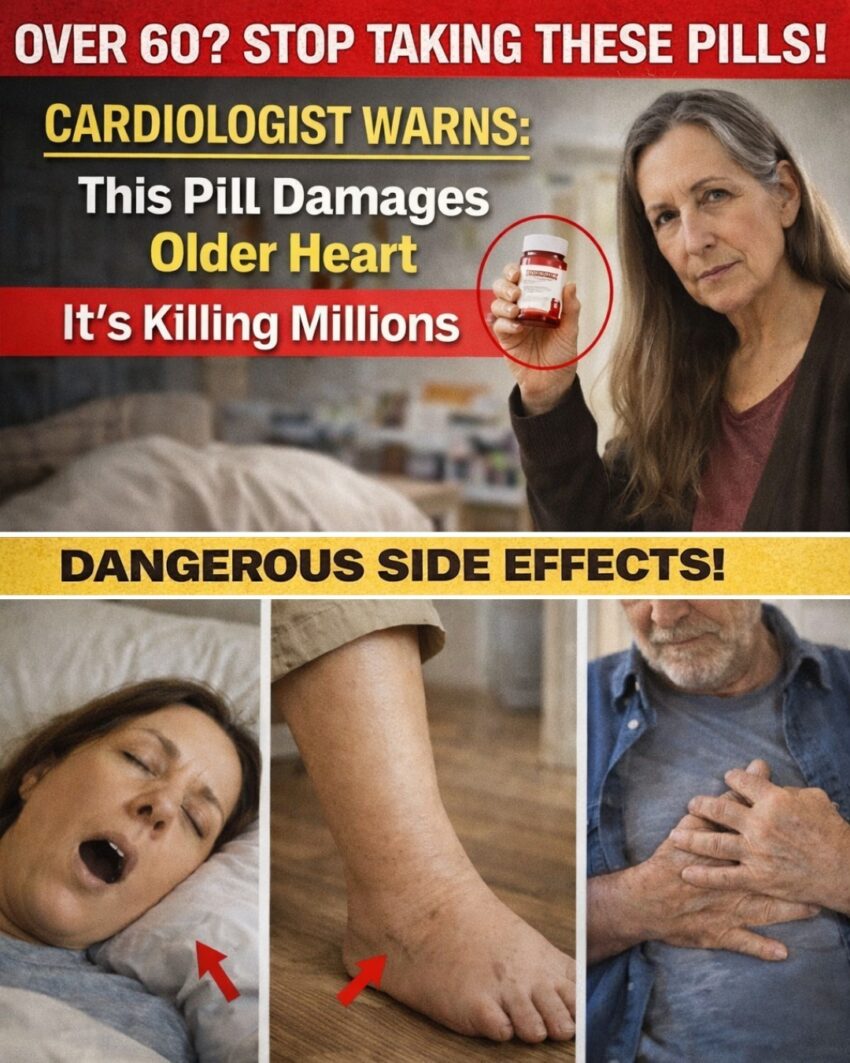
That headline is fear-based clickbait, not a credible medical warning.
There is no single “pill cardiologists warn everyone about” that universally damages older adults’ hearts. In real medicine, risks depend on:
- the specific drug
- the dose
- the patient’s health conditions
- and how it’s monitored
🫀 Why these videos are misleading
Cardiologists don’t issue blanket warnings like “this pill is destroying hearts.” Instead, they:
- evaluate individual medications for specific patients
- balance benefits vs risks
- adjust treatment based on conditions like blood pressure, kidney function, or heart disease
💊 Some medications can be risky in older adults (context matters)
Certain drug groups may need caution in seniors, for example:
- Some NSAIDs (painkillers like ibuprofen) → can raise blood pressure or strain heart/kidneys
- Some decongestants → may increase heart rate or blood pressure
- Certain blood pressure meds → may cause dizziness or low blood pressure if not adjusted properly
- Some anti-arrhythmic drugs → require careful monitoring
But none of these are “universally dangerous” for all older adults.
🧠 What doctors actually focus on in seniors
Instead of fear, real cardiology focuses on:
- correct dosing (often lower in older age)
- avoiding harmful drug combinations
- monitoring kidney and liver function
- managing blood pressure and cholesterol safely
⚠️ Red flags in content like this
Be cautious when you see:
- “Doctors don’t want you to know”
- “One pill destroying hearts”
- “Shocking warning for seniors”
These are designed to get clicks, not educate.
✔️ Bottom line
There is no single “heart-damaging pill for all older adults.” Medication safety depends on the person, the dose, and medical supervision.
If you want, tell me the specific pill mentioned in the video—I can break down its real risks and benefits in plain language.
