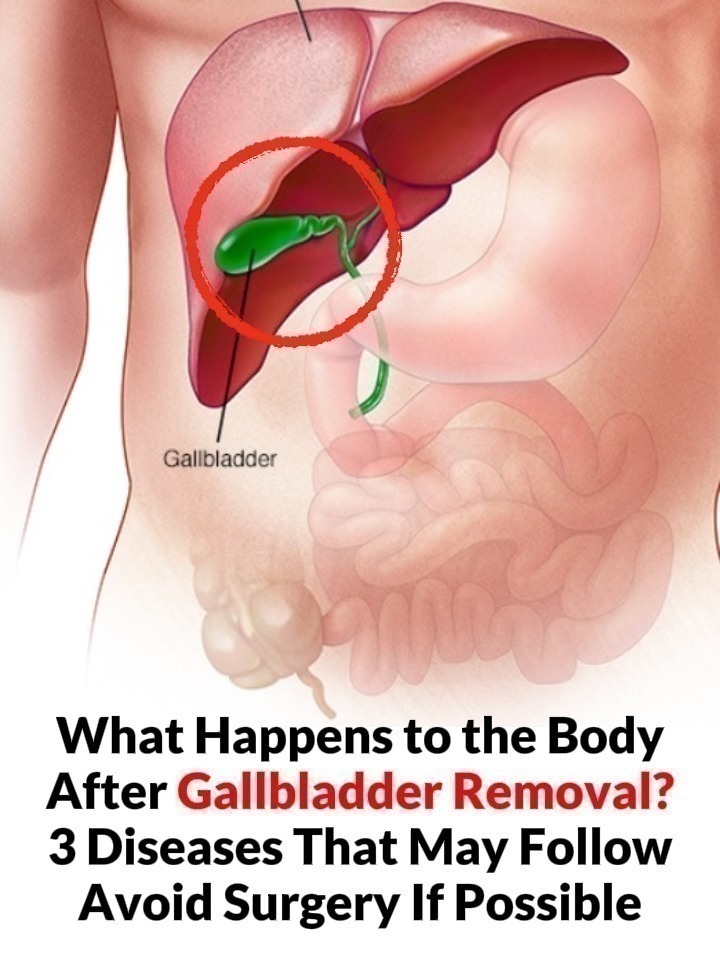
That headline is fear-based and misleading. It suggests people should “avoid surgery,” but in reality, gallbladder removal is often necessary and beneficial when medically indicated.
The surgery is called:
Cholecystectomy
It’s commonly done for gallstones and related complications.
🧠 First, an important truth
- Doctors do not recommend this surgery lightly
- It’s usually done when symptoms or complications are significant
- For many people, it relieves pain and prevents serious problems
⚠️ Possible conditions after gallbladder removal
Some people may experience changes because bile flows differently after surgery.
1. Digestive changes (most common)
- loose stools or diarrhea
- difficulty digesting fatty foods
👉 Usually temporary and improves over time.
2. Bile reflux (less common)
- bile irritation in stomach
- can cause discomfort or burning
3. Postcholecystectomy syndrome (rare)
- ongoing abdominal pain or digestive symptoms
- may need further evaluation
❌ What the viral claim gets wrong
- These are not guaranteed outcomes
- Most people recover well and live normally
- It exaggerates risks to scare people away from needed treatment
⚠️ When surgery is actually important
Gallstones can lead to:
- severe pain
- infection
- pancreatitis (serious complication)
👉 In these cases, surgery is often the safest option.
✔️ When surgery might be avoided
- mild or occasional symptoms
- no complications
- manageable with diet (low-fat meals)
But this depends on doctor evaluation, not internet advice.
🧠 Bottom line
Gallbladder removal is not something to fear or avoid blindly. While some digestive changes can happen, the surgery is safe, common, and often necessary to prevent more serious problems.
If you want, I can explain what diet to follow after gallbladder removal to avoid digestion issues (very practical and easy).
