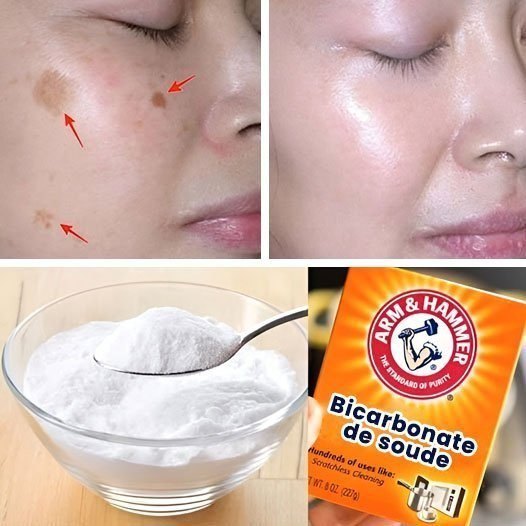
Baking soda is often promoted online as a quick fix for skin problems like dark spots, wrinkles, and dark circles—but it’s important to be careful here.
⚠️ First: the truth about baking soda on skin
Baking soda is not a skin-care ingredient designed for the face. It is:
- Highly alkaline (can disrupt skin’s natural pH)
- Potentially irritating or drying
- Able to damage the skin barrier if used repeatedly
So while it may give a temporary “brightening” feel by exfoliation, it does not safely or effectively remove wrinkles, dark circles, or true pigmentation long-term.
🧪 What baking soda actually can do (limited)
- Mild exfoliation (removes dead skin cells)
- Temporary smoothness
- Short-term oil reduction
That’s it. Any “lightening” effect is usually temporary and from irritation, not real skin repair.
⚠️ Risks of using baking soda on the face
- Redness and burning
- Dry patches and peeling
- Worsening pigmentation over time
- Increased sensitivity to sunlight
- Damage to skin barrier (can make dark spots worse)
This is especially risky for under-eyes, where skin is very thin.
👁️ About dark circles, wrinkles, and dark spots
These have different causes:
- Dark circles: sleep, genetics, thin skin, blood vessels
- Wrinkles: collagen loss, aging, sun exposure
- Dark spots: sun damage, acne marks, inflammation
Baking soda does not treat these root causes.
🌿 Safer, more effective alternatives
🌞 For dark spots
- Sunscreen daily (most important)
- Vitamin C serums
- Niacinamide
- Gentle exfoliation (like lactic acid or glycolic acid)
👁️ For dark circles
- Adequate sleep
- Cold compress
- Caffeine eye creams
- Hydration
🧴 For wrinkles
- Retinol (vitamin A derivative)
- Sunscreen
- Moisturizers with hyaluronic acid
🧾 Bottom line
Baking soda is not recommended for facial skin care, especially for:
- Under-eye area
- Wrinkles
- Pigmentation treatment
It may do more harm than good.
If you want, I can give you a safe natural face routine using kitchen ingredients that actually helps skin glow without damage.
