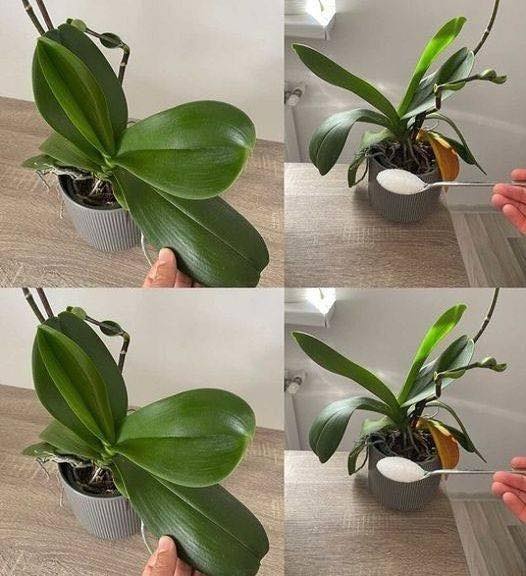
That claim—“just 1 tablespoon and orchids will bloom non-stop”—is not true and is a typical viral gardening exaggeration.
🌸 Orchids & the “1 tablespoon miracle fertilizer” myth
For orchids (like Phalaenopsis orchid), blooming depends on proper conditions, not a single spoon of anything.
There is no fertilizer that makes orchids bloom continuously.
🧪 What people usually mean by “1 tablespoon”
These posts often refer to:
- Banana water
- Rice water
- Milk or sugar water
- Yeast mixtures
⚠️ Reality:
These may:
- Feed microbes in the pot briefly
- Cause mold or root rot if overused
- Create short-term leaf shine (not flowers)
But they do not trigger nonstop blooming.
🌿 What actually makes orchids bloom
🌤️ 1. Light (most important)
- Bright, indirect sunlight
- Too little light = no flowers
🌡️ 2. Temperature change
- A small drop at night helps trigger flower spikes
- This is a key “signal” for blooming
💧 3. Proper watering
- Water only when roots turn silvery
- Overwatering = root rot (most common problem)
🧴 4. Real fertilizer (if needed)
- Balanced orchid fertilizer (diluted to 1/4 strength)
- Used every 2–4 weeks during growth
🌱 5. Natural cycle
Orchids:
- Bloom → rest → grow → bloom again
They do not bloom continuously year-round.
🚫 Red flags in viral claims
Be cautious with:
- “Non-stop flowers forever”
- “One spoon miracle fertilizer”
- “Secret kitchen hack”
- No explanation of conditions or plant care
🧾 Bottom line
- ❌ No single tablespoon fertilizer causes nonstop blooms
- 🌸 Orchids bloom based on light, temperature, and care cycles
- ✅ Consistency beats “miracle” hacks every time
If you want, I can give you a simple step-by-step guide to make a stubborn orchid rebloom in 6–10 weeks (this is what actually works).
