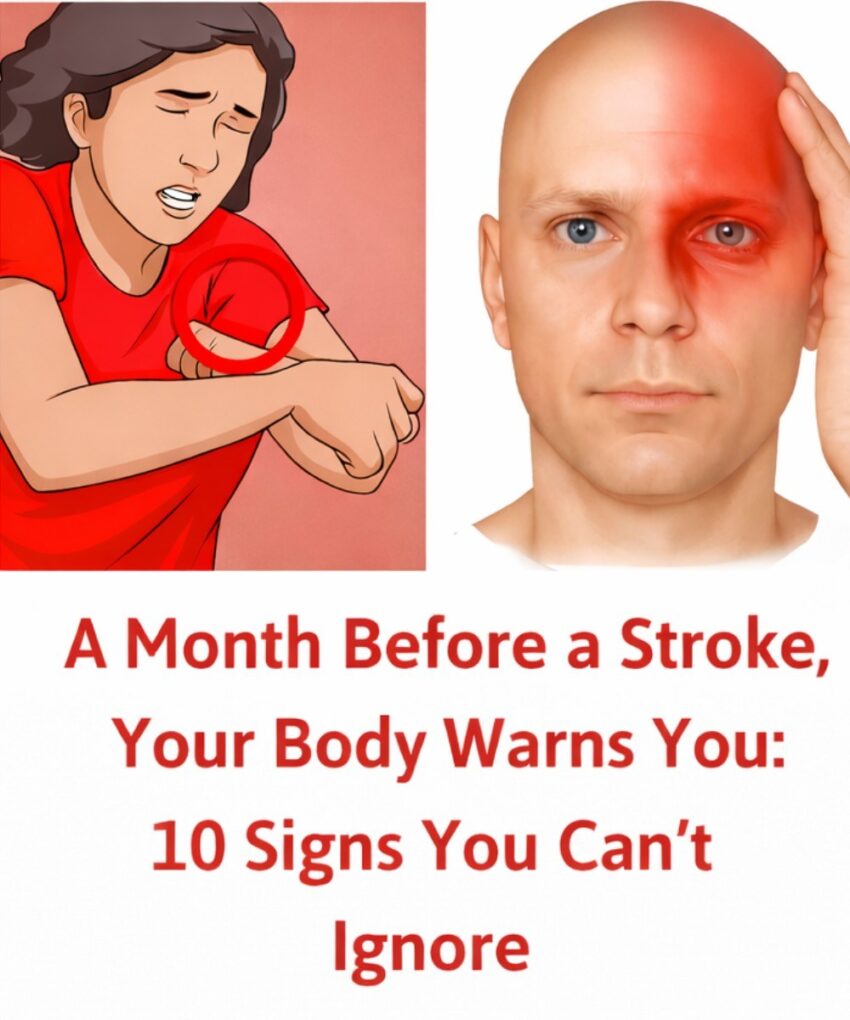
That kind of headline is partly based on real medical warning symptoms, but it’s also over-simplified and sometimes misleading.
🧠 Important truth first
- Some people do have warning symptoms days or weeks before a stroke.
- But many strokes happen suddenly with no long warning period.
- There is no reliable “10-sign checklist” that predicts a stroke a month in advance for everyone.
🚨 Real warning signs (can happen before or during a stroke)
These are medically recognized symptoms to take seriously:
FAST signs (most important)
- F – Face drooping (one side of face feels weak or uneven)
- A – Arm weakness (one arm drifts down when raised)
- S – Speech trouble (slurred or strange speech)
- T – Time to call emergency help immediately
⚠️ Possible early warning episodes (TIA or “mini-stroke”)
These can happen hours, days, or sometimes weeks before a major stroke:
- Sudden numbness or weakness in face/limbs
- Temporary vision loss or blurred vision
- Sudden confusion or difficulty speaking
- Dizziness, loss of balance, trouble walking
- Severe unexplained headache
👉 These may last minutes and then disappear (this is dangerous—still requires urgent care).
🧠 Other risk signals (not direct warning, but risk factors)
These increase stroke risk over time:
- High blood pressure
- Diabetes
- Smoking
- High cholesterol
- Heart rhythm problems (like atrial fibrillation)
- Obesity and inactivity
🚫 What to be careful about online lists
Articles claiming “10 signs a month before a stroke” often:
- mix real symptoms with vague ones (fatigue, anxiety, etc.)
- create fear without medical accuracy
- ignore that strokes are often sudden
⏱️ Bottom line
- The only reliable emergency warning system is FAST symptoms
- Any sudden neurological change = medical emergency
- Don’t wait days or weeks if symptoms appear
If you want, I can give you a simple stroke prevention plan or explain how to reduce risk if someone has high blood pressure or diabetes.
