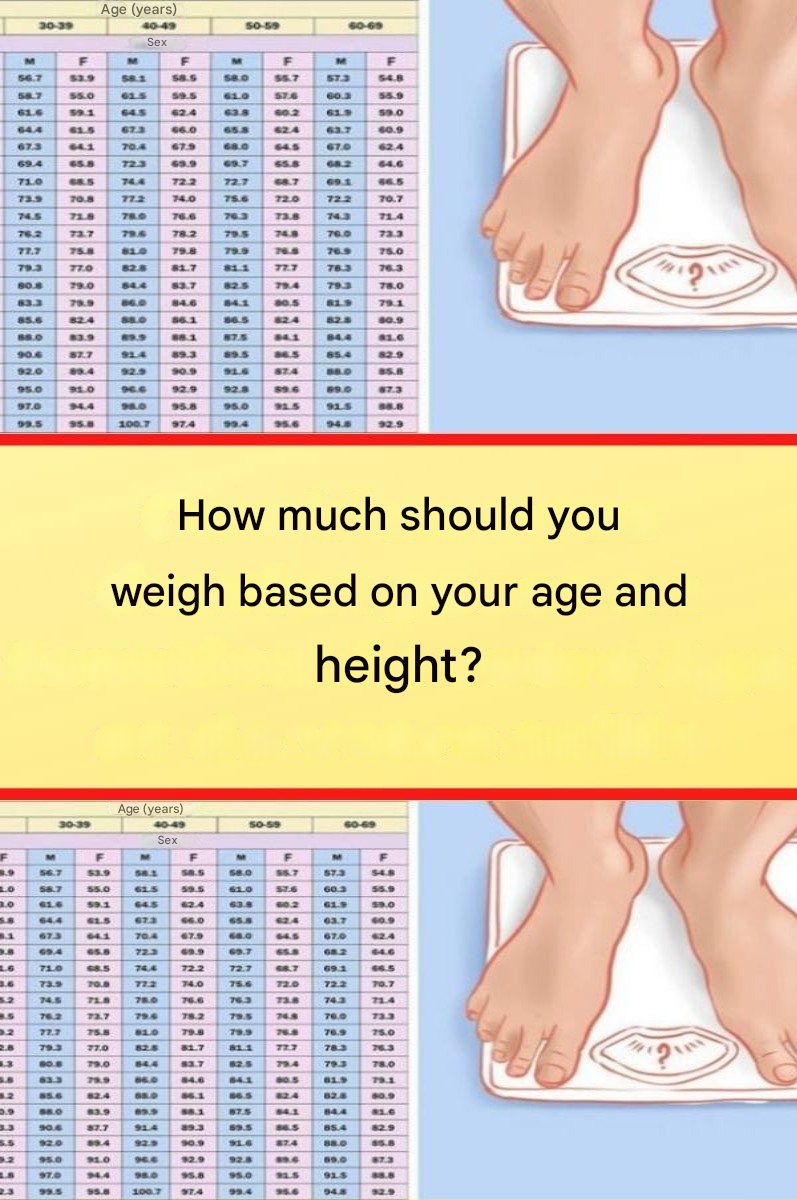
Your “ideal weight” is not based on age alone—it depends mainly on height, sex, body composition (muscle vs fat), and health status. Age can slightly affect body composition, but it’s not used to calculate a strict “perfect weight.”
The most common medical way to estimate a healthy weight range is BMI (Body Mass Index).
📊 Healthy BMI range
- 18.5 to 24.9 = healthy range for most adults
⚖️ How to calculate your healthy weight range
Step 1: Convert height to meters
Step 2: Use this formula:
Weight = BMI × height²
So:
- Lower healthy weight = 18.5 × height²
- Upper healthy weight = 24.9 × height²
📏 Example healthy weight ranges
👤 Height: 5’0″ (152 cm)
- Healthy weight: 43 – 58 kg
👤 Height: 5’4″ (163 cm)
- Healthy weight: 49 – 66 kg
👤 Height: 5’6″ (168 cm)
- Healthy weight: 52 – 70 kg
👤 Height: 5’8″ (173 cm)
- Healthy weight: 55 – 74 kg
👤 Height: 6’0″ (183 cm)
- Healthy weight: 62 – 83 kg
🧠 Important notes
- Older adults (60+) may be healthy even slightly above BMI range if they have good muscle and strength
- Athletes may be heavier due to muscle, not fat
- Waist size also matters (belly fat is more important than scale weight)
📏 Better health indicator than weight alone
- Waist circumference
- Risk increases if >102 cm (men) or >88 cm (women)
- Energy levels
- Blood pressure, sugar, cholesterol
✔️ Bottom line
There is no single ideal weight for each age, but a BMI-based range adjusted for height is the standard guideline.
If you tell me your height, age, and gender, I can calculate your exact healthy weight range for you.
