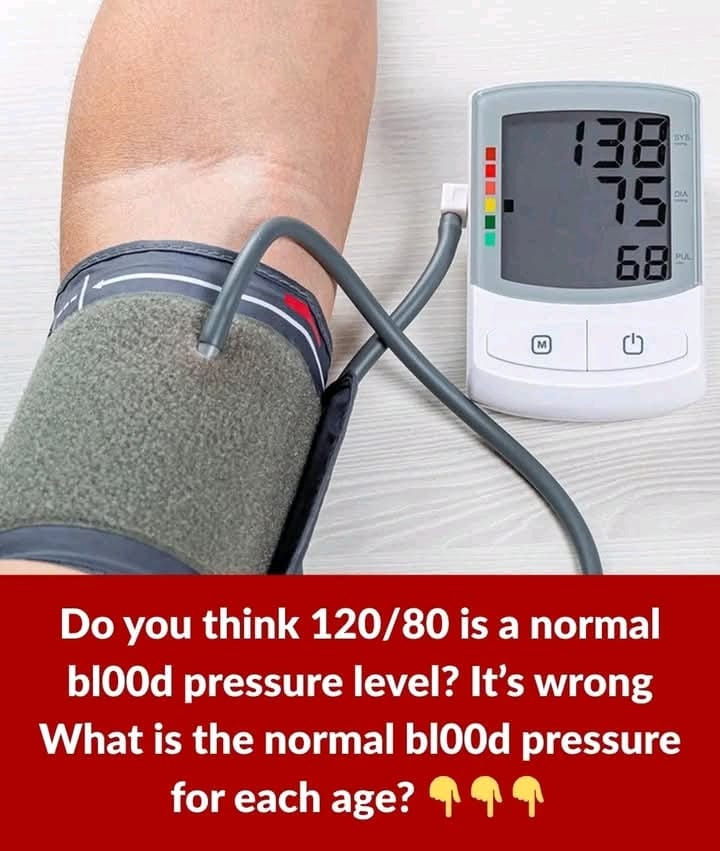
“Normal blood pressure” depends more on age + height (for children) + overall health, but there are common reference ranges doctors use.
🧠 First, what BP numbers mean
Blood pressure is written like:
- Systolic (top number) = pressure when heart beats
- Diastolic (bottom number) = pressure when heart rests
Example: 120/80 mmHg
📊 Normal Blood Pressure by Age
👶 Newborns (0–1 month)
- Systolic: 60–90
- Diastolic: 20–60
🍼 Infants (1–12 months)
- Systolic: 80–100
- Diastolic: 30–65
👧 Children (1–10 years)
- Systolic: 90–110
- Diastolic: 50–75
(In children, “normal” depends strongly on height and percentiles, not just age.)
🧑 Teenagers (11–17 years)
- Systolic: 100–120
- Diastolic: 60–80
🧑🦱 Adults (18–59 years)
- Normal: Below 120/80 mmHg
- Elevated: 120–129 / <80
- High BP (Hypertension): 130/80 or higher
👴 Older adults (60+ years)
- Often still considered normal:
- Systolic: 110–130
- Diastolic: 70–80
(Slightly higher systolic is common with age due to stiff arteries.)
⚠️ Important Notes
- “Normal” can vary slightly depending on guidelines (AHA, WHO).
- One reading is not enough to diagnose anything.
- Stress, pain, caffeine, and activity can temporarily raise BP.
🚨 When to worry
- Low BP: below ~90/60 (if symptoms like dizziness)
- High BP: consistently ≥130/80 in adults
If you want, I can also tell you:
✔ How to check BP correctly at home
✔ What BP is dangerous (emergency levels)
✔ Foods that naturally help lower blood pressure
