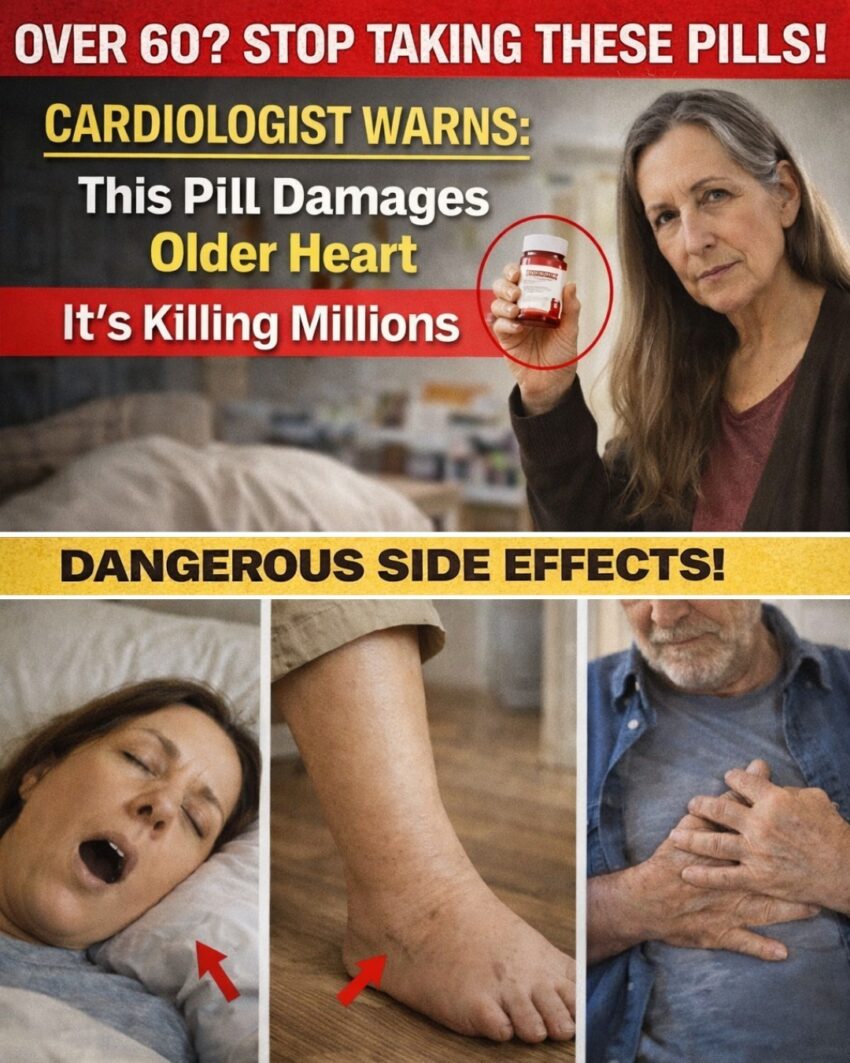
That headline—“Cardiologist WARNS: This Pill Is Damaging the Hearts of Older Adults!”—is typical fear-based clickbait, and it’s misleading because it doesn’t name a specific single “danger pill.”
🧠 What’s really going on
When you check these videos/articles, they usually group multiple common medicines, not one specific “evil pill.”
Doctors do talk about medication risks in older adults, but it’s more nuanced than social media suggests.
💊 Medicines sometimes discussed in these warnings
Based on real medical research, some drug groups that can affect heart health in older adults include:
1. Painkillers (NSAIDs)
- Examples: ibuprofen, diclofenac
- Can increase:
- blood pressure
- risk of heart problems in long-term use
(The Times of India)
2. Sleep/anxiety medicines (benzodiazepines)
- Can cause:
- dizziness
- falls
- slower breathing in some cases
- More risk in elderly due to sensitivity
3. Acid reflux drugs (PPIs)
- Examples: omeprazole, pantoprazole
- Long-term use may be linked with:
- nutrient deficiencies
- possible heart-related risks (indirect)
4. Decongestants (cold medicines)
- Can raise:
- blood pressure
- heart rate
(The Times of India)
5. “Polypharmacy” (taking many pills)
- The biggest real issue
- More drugs = more interaction risk
- Not one pill, but combination effects
(Harvard Health)
⚠️ Important truth
- No single “secret pill” is universally damaging for all older adults
- Many of these drugs are safe when used correctly and monitored by a doctor
- Stopping medicines without advice can be dangerous
🧠 Bottom line
- The video title is exaggerated
- Real message (hidden inside) = some medicines need careful use in older adults
- The real risk is usually wrong dose, long-term misuse, or drug interactions—not one specific pill
If you want, tell me the exact medicine you’re worried about, and I’ll explain whether it’s actually risky or safe in simple terms.
