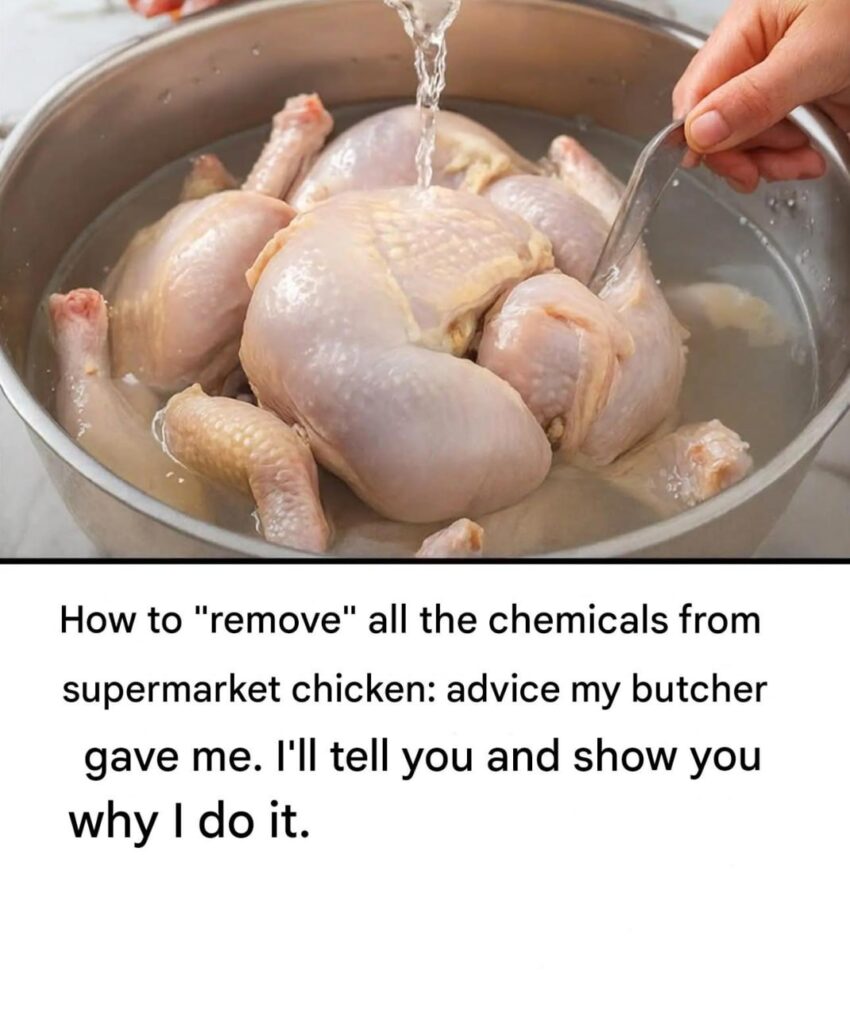
That headline is misleading and sensational.
Chicken sold in supermarkets is not “soaked in chemicals” that can be simply removed at home. In most countries, poultry is regulated and may contain trace residues (like cleaning agents, preservatives, or veterinary drugs), but these are kept within legal safety limits.
🧠 What people usually mean by “chemicals in chicken”
- Chlorine or antimicrobial rinses (used in some processing plants)
- Veterinary drug residues (strictly regulated withdrawal periods)
- Natural fluids and preservatives in packaging
👉 These are not dangerous in normal regulated amounts.
🍗 Can you “remove chemicals” at home?
Not really. Washing chicken:
- ❌ does NOT remove internal residues
- ❌ does NOT make it “chemical-free”
- ❌ can actually spread bacteria around your kitchen
🧼 What you should do instead (safe handling)
✔️ 1. Do NOT wash raw chicken
- Washing spreads bacteria like Salmonella
- Cooking is what makes it safe
✔️ 2. Cook thoroughly
- Internal temperature should reach 74°C (165°F)
- This kills harmful bacteria effectively
✔️ 3. Drain packaging liquid safely
- Pour juices directly into sink, not on surfaces
- Wash hands and utensils immediately
✔️ 4. Choose better-quality chicken (if possible)
- Look for reputable suppliers
- Organic or farm-raised options may reduce concerns about antibiotics
⚠️ Reality check on “slaughterhouse worker revelations”
These types of articles often:
- exaggerate normal food processing practices
- use fear to gain attention
- mix real facts with misinformation
🧠 Bottom line
You cannot “remove chemicals” from supermarket chicken at home. The safe approach is:
👉 don’t wash it, cook it properly, and handle it hygienically
If you want, I can explain:
- how chicken is actually processed in factories
- or how to choose the safest chicken in your local market 👍
