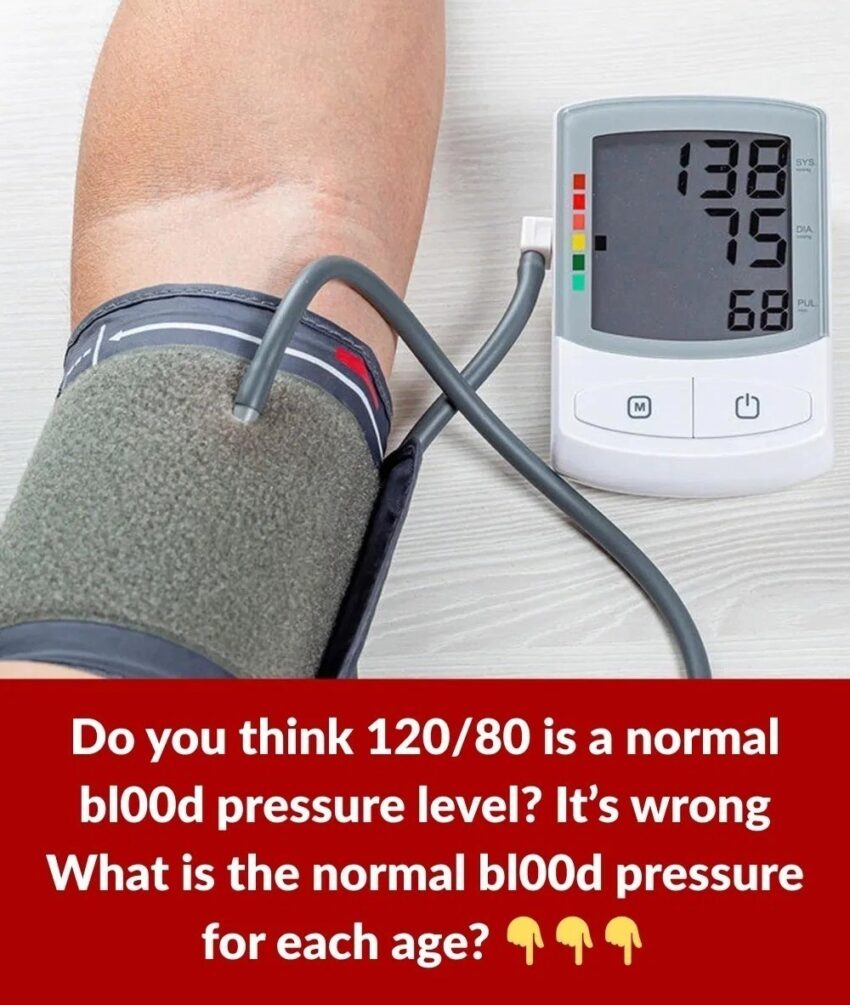
Blood pressure varies slightly by age, but modern medical guidelines say there is one “normal range” for most adults, with only small differences for children and older adults.
Blood pressure is measured in mmHg and written like:
120/80 mmHg (systolic / diastolic)
- Systolic = pressure when heart beats
- Diastolic = pressure when heart rests
🫀 Normal Blood Pressure by Age
👶 Children (1–12 years)
Normal varies by height and age, but generally:
- Normal range: ~90/60 to 110/70 mmHg
👦 Teenagers (13–18 years)
- Normal: about 100/65 to 120/80 mmHg
- Anything consistently above 130/80 may be early concern
🧑 Adults (18–59 years)
- Normal blood pressure:
👉 Below 120/80 mmHg
Categories:
- Normal: <120 / <80
- Elevated: 120–129 / <80
- High (Hypertension stage 1): 130–139 / 80–89
- High stage 2: ≥140 / ≥90
👴 Older Adults (60+ years)
- Ideal still: <120/80 mmHg
- Slightly higher readings are more common due to stiff arteries:
- Often acceptable target: up to ~130–139 systolic depending on health
⚠️ But consistently above 140/90 is still considered hypertension.
📊 Simple Quick Chart
| Age Group | Normal BP |
|---|---|
| Children | ~90/60 – 110/70 |
| Teens | ~100/65 – 120/80 |
| Adults | <120/80 |
| Older adults | <130/80 (ideal still <120/80) |
⚠️ When to worry
- Repeated readings ≥140/90
- Dizziness, headaches, chest pain
- Very low BP (below ~90/60 with symptoms)
🧠 Key takeaway
There isn’t a completely different “normal BP” for every age group—rather:
👉 120/80 mmHg is the universal healthy target for most people
Age mainly affects how common higher readings become, not what is truly “healthy.”
If you want, I can also explain how to correctly check blood pressure at home so your readings are accurate.
