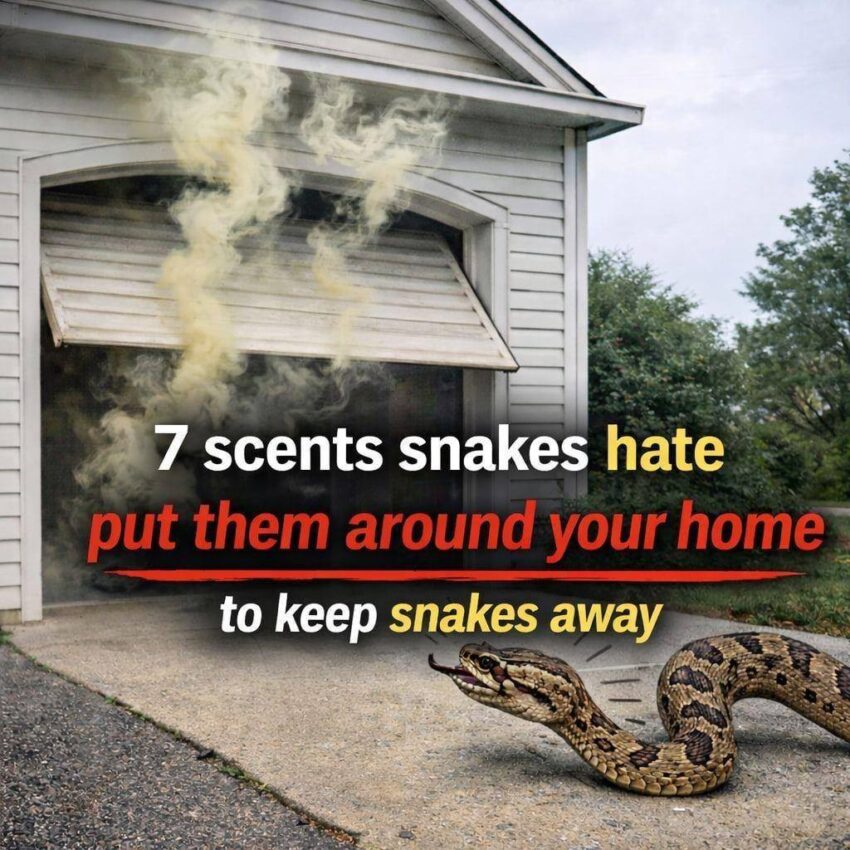
The idea of “scents that keep snakes away” is popular online, but it’s important to be honest: there is no strong scientific proof that any smell reliably repels snakes in real-world conditions.
Snakes mainly respond to food, shelter, temperature, and vibrations, not scents the way insects might.
That said, some smells are commonly claimed to deter snakes. Here are 7 you’ll often see mentioned:
1) Garlic
Strong odor oils are believed to irritate snakes, but evidence is weak.
2) Onion
Similar to garlic—often suggested in home remedies, but not proven.
3) Cinnamon
Sometimes used in powdered or oil form in “snake repellent” mixtures.
4) Clove oil
Has a strong smell and is included in some commercial repellents, but results are inconsistent.
5) Peppermint oil
Common in DIY repellents; may discourage some pests, but not reliably snakes.
6) Vinegar
Used around pools or edges of yards in some DIY methods, but effectiveness is limited.
7) Lemongrass
Sometimes included in natural repellent claims, again with no solid evidence.
What actually works better (important)
If you’re dealing with snakes around your home (which can happen in areas like southern Punjab), these steps are far more effective:
- Keep grass and bushes trimmed short
- Remove piles of wood, bricks, or garbage
- Seal holes in walls, drains, and compound gaps
- Control rats and rodents (snakes follow food)
- Use mesh on drains and ventilation openings
- Keep outdoor lighting to reduce hiding areas
Bottom line
These scents are mostly traditional or internet claims, not reliable snake control methods. Real prevention is about removing shelter and food sources, not fragrances.
If you want, tell me your situation (house, farm, yard), and I can suggest a practical snake-proof setup for your area.
