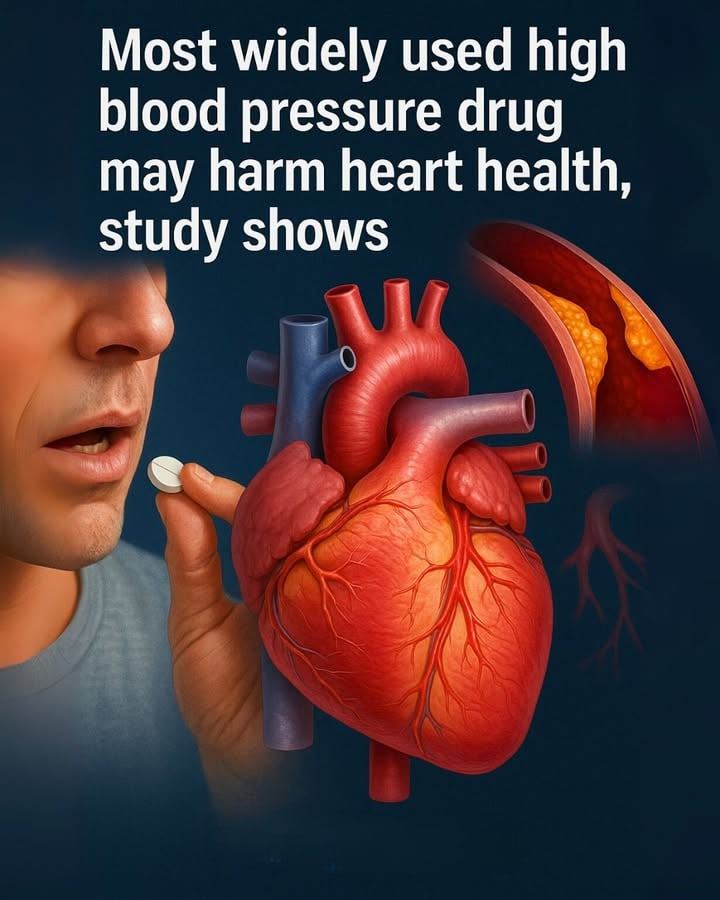
This claim is misleading and based on a distorted version of a real Penn State study.
🧠 What the study actually said
There is a Penn State study that found:
- A certain class of blood pressure drugs may affect blood vessels in lab and animal models
- They observed vascular remodeling (changes in vessel structure)
- Some data showed an association with higher heart failure risk in certain groups
But this is about a specific class of drugs (L-type calcium channel blockers)—not “the most widely prescribed blood pressure drug” in general.
Calcium channel blocker
The researchers suggested:
- “Careful use in certain high-risk patients”
- Not stopping or avoiding the drugs universally
⚠️ What viral posts get wrong
The social media version twists it into:
“The most widely used blood pressure drug causes reduced blood flow and heart failure”
That is not what medical evidence concludes.
Problems with that claim:
- ❌ It generalizes one drug class to all BP medications
- ❌ It ignores decades of clinical trials
- ❌ It confuses “lab findings” with real-world outcomes
- ❌ It skips the fact that BP drugs reduce stroke and heart attack risk overall
❤️ What real large studies show
Across hundreds of trials:
- Blood pressure medications reduce strokes
- They reduce heart attacks
- They reduce overall cardiovascular death
No major guideline recommends avoiding them based on this study.
🧪 Important nuance
Some research (including Penn State work) has raised questions like:
- How certain drugs affect vessel structure long-term
- Whether specific subgroups need closer monitoring
But that is very different from saying:
“These drugs cause heart failure”
🧾 Bottom line
- The headline is clickbait and exaggerated
- It misrepresents a limited, specific scientific finding
- Blood pressure medications overall are still life-saving and strongly recommended
- Any concerns apply to specific drug types and specific patients, not everyone
If you want, I can break down which blood pressure medicines are safest for older adults and which ones doctors usually prefer first-line in simple terms.
