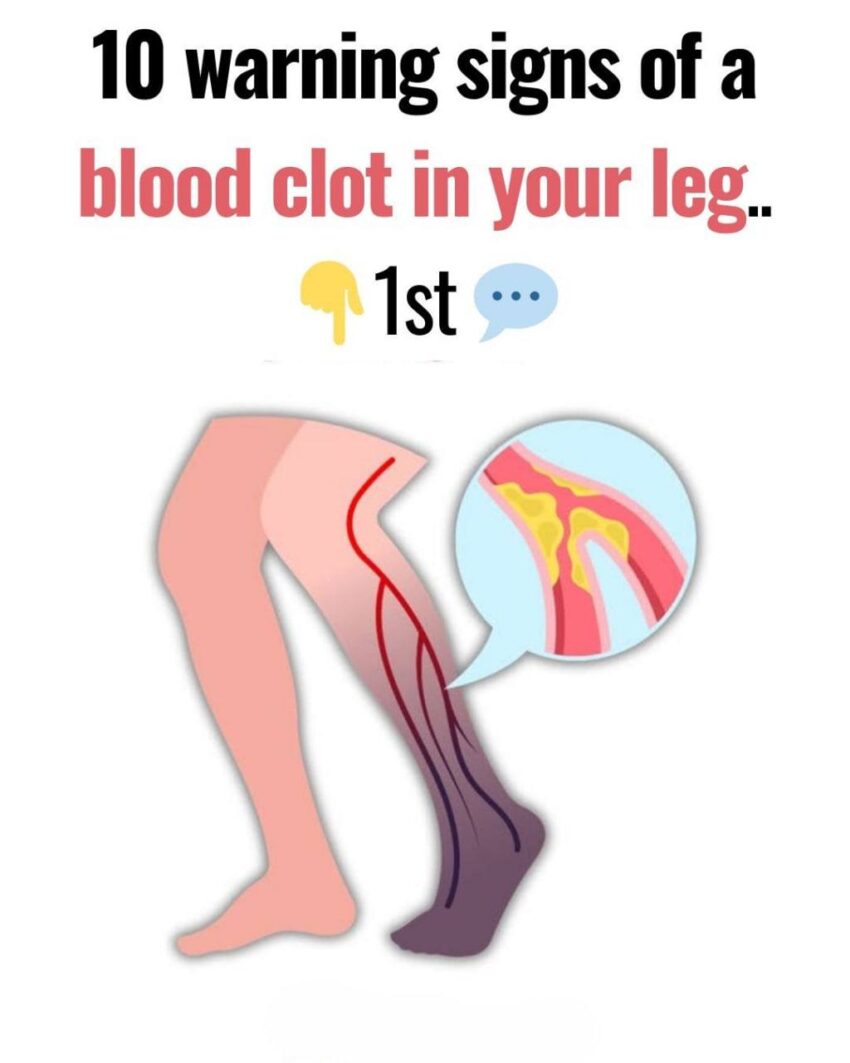
That post is mixing a real condition with fear-based wording.
Deep vein thrombosis (DVT) is serious, but it doesn’t usually present as a neat “10-sign checklist,” and it doesn’t always strike completely without context.
🧠 What DVT actually is
A blood clot forms in a deep vein—most often in the leg—and can become dangerous if it travels to the lungs (pulmonary embolism).
⚠️ Real warning signs of DVT
1. Swelling in one leg
Usually not both—this is one of the most important clues.
2. Leg pain or tenderness
Often feels like a cramp or soreness, especially in the calf.
3. Warmth in the affected area
The skin may feel warmer than the other leg.
4. Red or discolored skin
Sometimes reddish or bluish.
5. Enlarged or visible surface veins
Veins may look more prominent than usual.
🚨 Emergency signs (possible clot in lungs)
Seek urgent help if you notice:
- sudden shortness of breath
- chest pain (especially when breathing)
- coughing up blood
🧠 Reality check on the viral post
- There is no reliable “10 early signs” list
- Some people have very subtle or no symptoms at all
- The “hidden trigger” is usually just a common risk factor, not a secret
⚠️ Real risk factors (more important than viral lists)
- long periods of sitting (travel, bed rest)
- recent surgery
- smoking
- obesity
- pregnancy
- certain medications (like hormone therapy)
✔️ Bottom line
Deep vein thrombosis is serious, but the key is recognizing unilateral swelling, pain, and warmth—not memorizing exaggerated lists.
If you want, I can show you a simple at-home check to decide when leg pain might be DVT vs something harmless like muscle strain.
