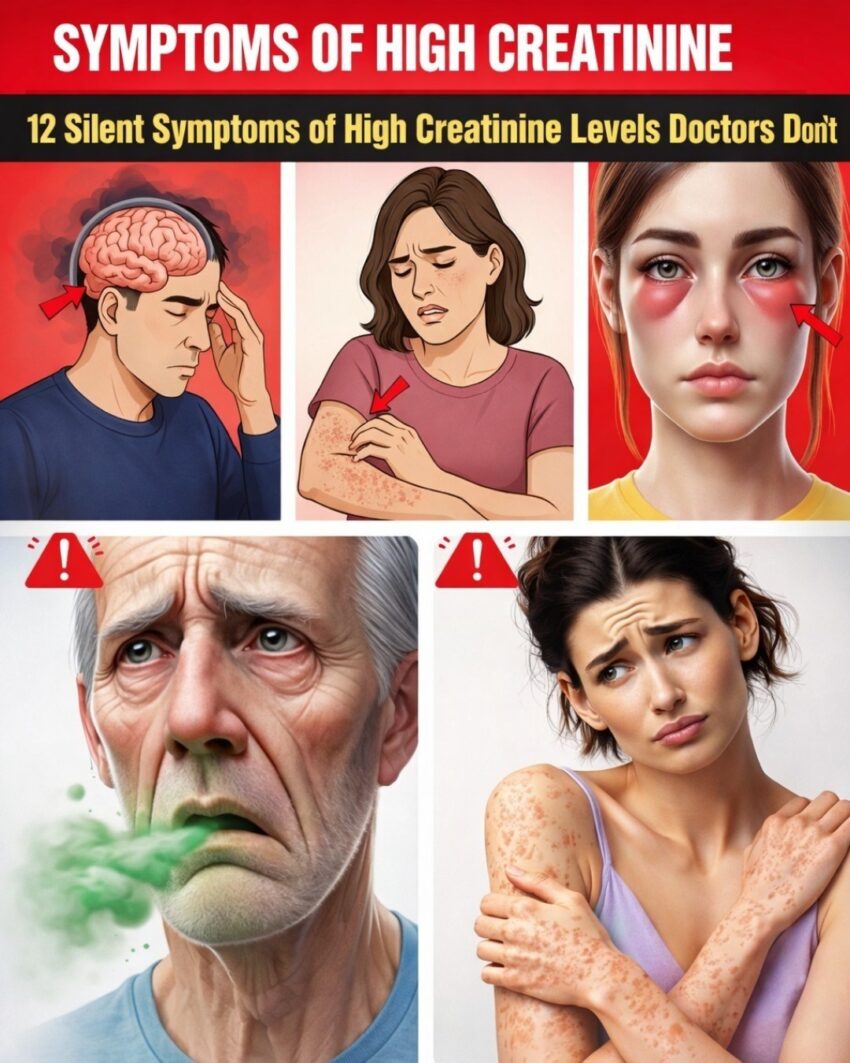
That headline is misleading and exaggerated. High creatinine doesn’t come with a clear list of “12 silent symptoms,” and doctors don’t “miss” it—because it’s routinely detected with simple blood tests.
🧪 What creatinine actually is
Creatinine
- produced by muscles
- filtered by the kidneys
- higher levels can signal reduced kidney function
🧠 The real condition behind it
Chronic kidney disease
Early kidney disease is often silent, which is why testing—not symptoms—is key.
⚠️ Symptoms (usually appear late, not early)
When kidney function worsens, you may notice:
- 🦵 swelling in feet/ankles (fluid retention)
- 😴 fatigue or weakness
- 🚽 changes in urination (frequency, foam, color)
- 🤢 nausea or poor appetite
- 🧠 difficulty concentrating
- 🧊 dry or itchy skin
- 💨 shortness of breath (advanced stages)
👉 These are not specific to creatinine alone and usually appear when the problem is already significant.
🚫 What the headline gets wrong
- ❌ there is no reliable “12 early warning signs” list
- ❌ symptoms are often vague and nonspecific
- ❌ doctors rely on lab tests, not guesswork
🧪 How it’s actually detected early
- blood creatinine level
- estimated GFR (kidney function)
- urine protein test
⚠️ Common reasons for high creatinine
- dehydration
- kidney disease
- certain medications
- high muscle mass (sometimes mild increase)
🧠 Bottom line
Creatinine levels don’t give clear early warning symptoms—regular testing is the only reliable way to catch problems early, not viral symptom lists.
If you want, I can explain normal creatinine ranges and what level becomes dangerous based on age and gender.
