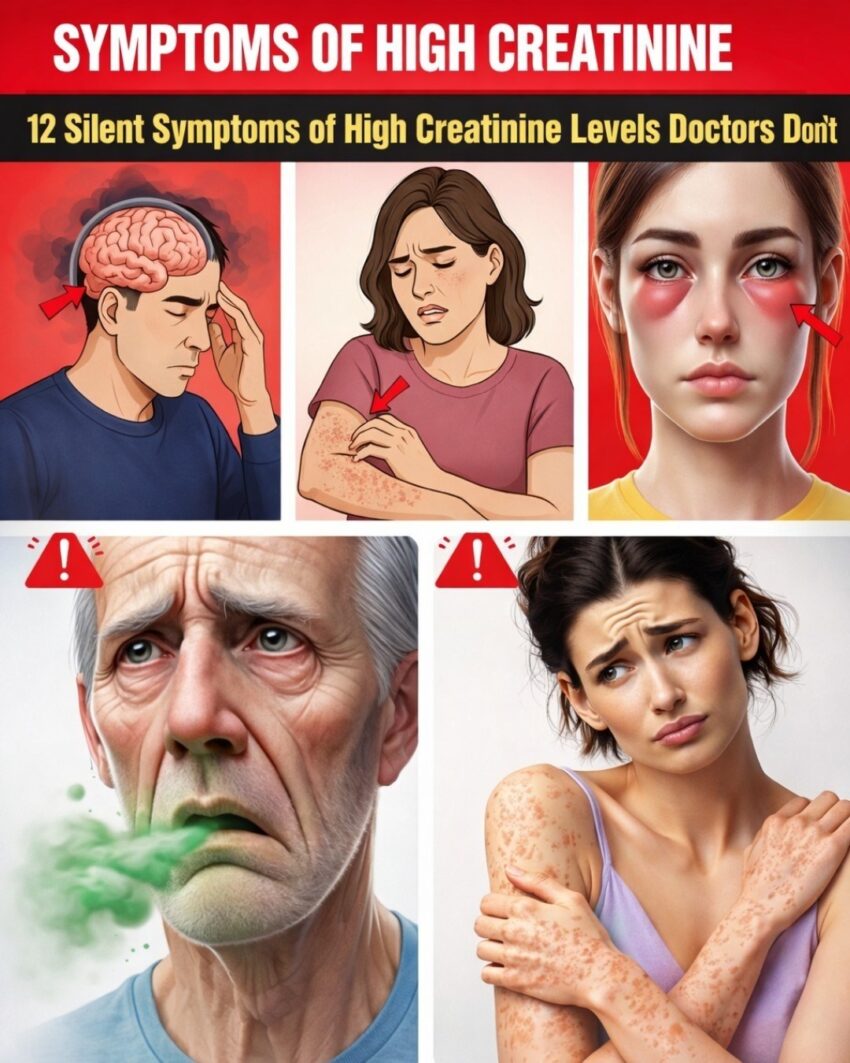
That headline is misleading. There are no reliable “12 silent symptoms” that specifically indicate high creatinine. What is true is that kidney problems can develop quietly, and creatinine is mainly a lab marker, not something you diagnose from symptoms alone.
🧪 What creatinine actually is
Creatinine
- produced by muscles
- removed by kidneys
- higher levels can suggest reduced kidney function
🧠 The condition behind it
Chronic kidney disease
Early stages often have no obvious symptoms, which is why testing matters more than symptom lists.
⚠️ Possible symptoms (usually late or non-specific)
🦵 1. Swelling in feet or ankles
- fluid buildup
😴 2. Fatigue
- toxin buildup or anemia
🚽 3. Changes in urination
- foamy urine
- more or less frequent urination
🤢 4. Nausea or poor appetite
🧠 5. Difficulty concentrating
🧊 6. Dry or itchy skin
💨 7. Shortness of breath (advanced cases)
🚫 What the headline gets wrong
- ❌ no specific “12 silent symptoms” list exists medically
- ❌ symptoms are vague and overlap with many conditions
- ❌ doctors don’t rely on symptoms alone—they use blood and urine tests
🧪 How it’s actually detected
- blood creatinine test
- estimated GFR (kidney function)
- urine protein test
⚠️ Common causes of high creatinine
- dehydration
- kidney disease
- certain medications
- high muscle mass (sometimes normal variation)
🧠 Bottom line
Creatinine is a lab indicator, not a symptom-based diagnosis. Kidney disease can be silent early on, which is why routine testing is important—not viral symptom lists.
If you want, I can explain what creatinine levels are considered normal vs dangerous and when to worry based on age and gender.
