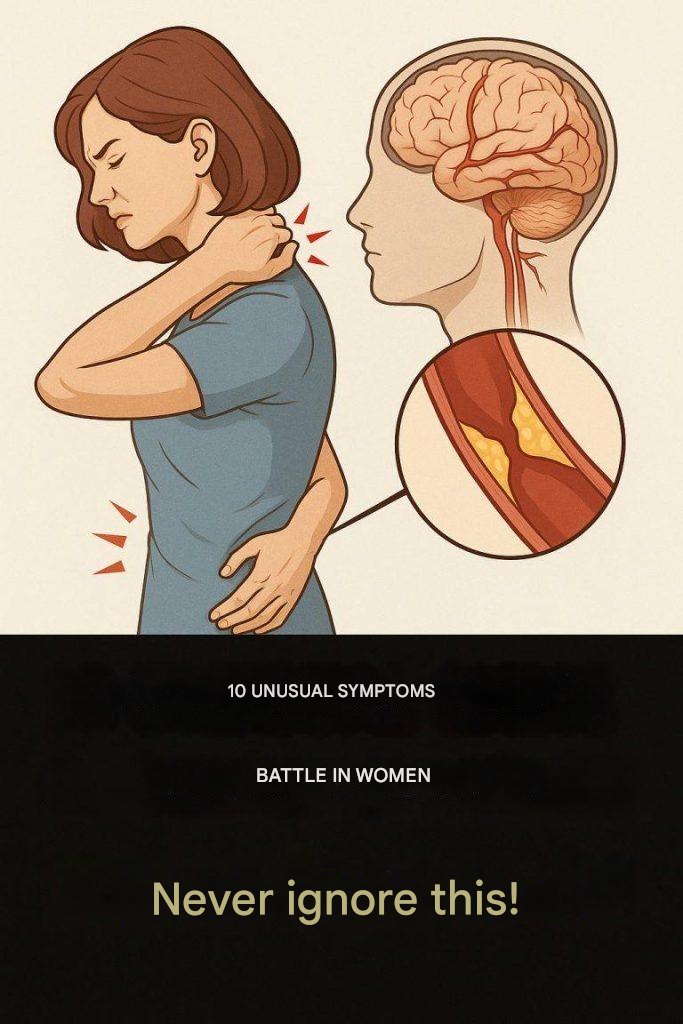
This kind of headline is designed to sound alarming, but there is a real medical point behind it: stroke symptoms in women can sometimes look less “classic” and more unusual, which leads to delays in treatment.
The key idea is simple: stroke is always a medical emergency—symptoms matter more than whether they are “typical” or “unusual.”
Here are 10 symptoms that can occur in women and are often missed or misread:
10 possible stroke symptoms in women (including unusual ones)
1. Sudden weakness or numbness (face, arm, or leg)
- Especially one-sided
- Classic sign, but still often ignored if mild
2. Sudden confusion or trouble thinking clearly
- Inability to follow conversations
- Appearing “disoriented” out of nowhere
3. Sudden severe headache (no known cause)
- Sometimes described as “worst headache of life”
- More common in hemorrhagic stroke
4. Sudden dizziness or loss of balance
- Feeling like the room is spinning
- Trouble walking straight
5. Sudden nausea or vomiting
- Especially when combined with dizziness or headache
- Often mistaken for stomach illness
6. Sudden fatigue or extreme exhaustion
- Unusual, abrupt tiredness without reason
- Can be subtle in early stroke
7. Shortness of breath or chest discomfort
- Less common but reported in women
- Can mislead people toward heartburn or anxiety
8. Sudden vision changes
- Blurred vision
- Double vision
- Loss of part of visual field
9. Sudden hiccups (rare but documented)
- More reported in brainstem strokes
- Especially when persistent and unexplained
10. Sudden emotional or behavioral changes
- Panic, agitation, confusion, or “not acting like themselves”
- Often mistaken for stress or psychiatric issues
Why women’s symptoms are sometimes missed
With a Stroke, the brain area affected matters more than gender—but studies show women more often report:
- nausea
- dizziness
- headache
- fatigue
instead of only the “textbook” FAST signs (Face drooping, Arm weakness, Speech trouble, Time).
Important reality check
Many of these symptoms can also come from non-stroke causes (migraine, anxiety, infection, etc.). What matters is:
- sudden onset
- new/unexplained
- multiple symptoms together
When to treat it as emergency
If someone suddenly develops:
- face/arm weakness
- speech difficulty
- confusion
- severe headache
- loss of balance or vision
→ Treat it as a stroke until proven otherwise and seek emergency care immediately.
If you want, I can also give you a quick “stroke vs migraine vs anxiety” comparison chart, which is where most people actually get confused in real life.
