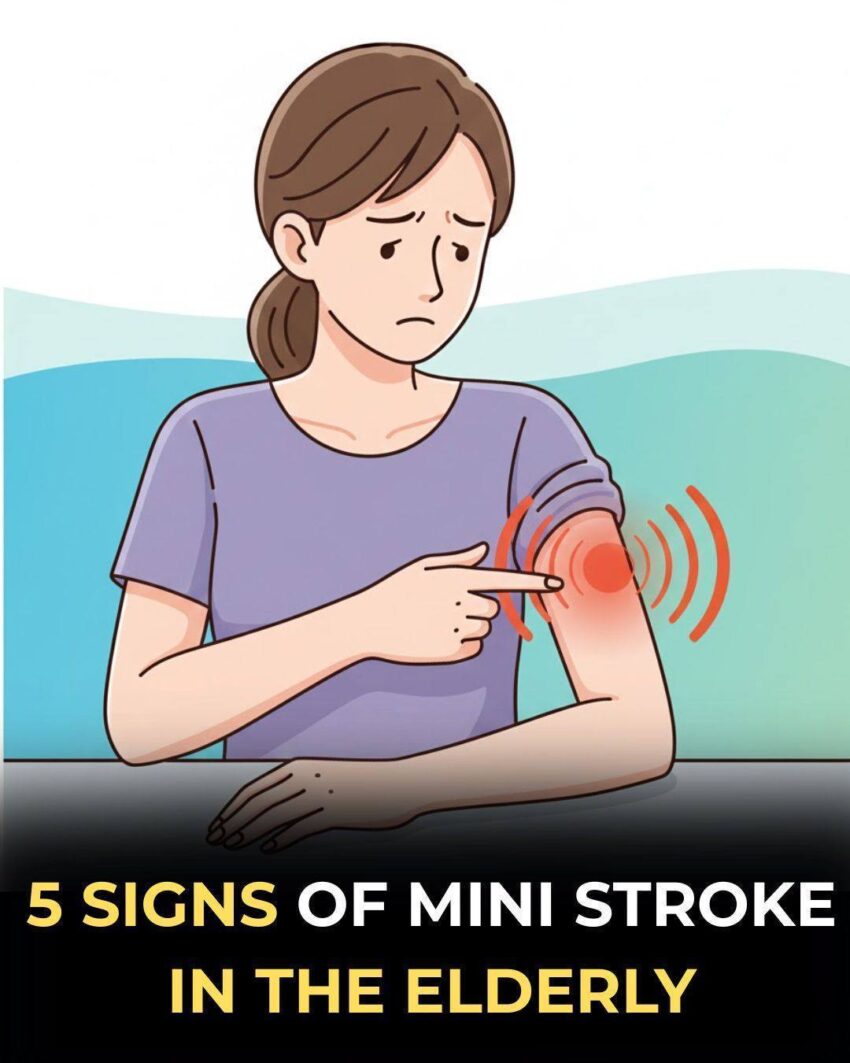
A “mini stroke” is commonly called a transient ischemic attack (TIA). It happens when blood flow to the brain is briefly blocked, and symptoms usually go away within minutes to hours—but it can be a serious warning sign of a future full stroke.
Here are 5 key signs to watch for in elderly people:
1) Sudden weakness or numbness (especially on one side)
Face, arm, or leg may feel weak or go numb—often just on one side of the body.
2) Facial drooping
One side of the face may look uneven or sag. The person may have trouble smiling evenly.
3) Speech problems
Slurred speech, trouble finding words, or difficulty understanding others.
4) Vision changes
Sudden blurred vision, double vision, or loss of vision in one or both eyes.
5) Dizziness, balance issues, or confusion
Sudden loss of coordination, trouble walking, or unexplained confusion.
Important note
Even if symptoms disappear quickly, a TIA is an emergency warning sign. The risk of a major stroke is highest in the first 24–48 hours after a TIA.
A simple way to remember key stroke signs is FAST:
- Face drooping
- Arm weakness
- Speech difficulty
- Time to call emergency services immediately
If you want, I can also explain how to tell the difference between a TIA, low blood sugar, and vertigo—those often get confused in older adults.
