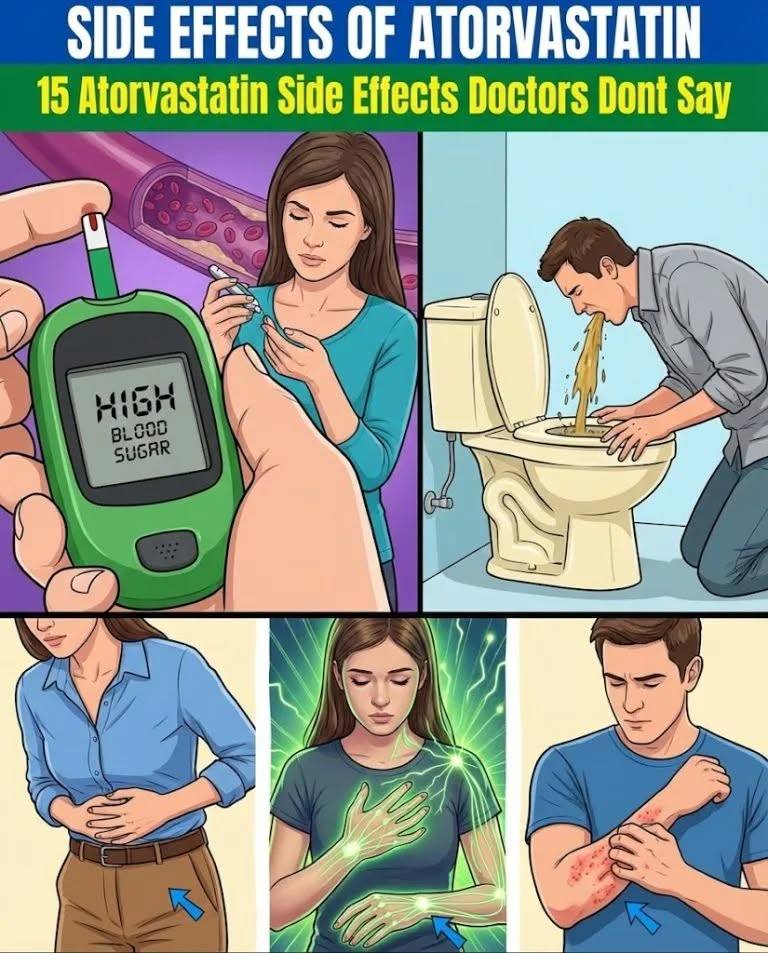
That headline is designed to sound alarming. In reality, atorvastatin (a statin medication) is one of the most studied drugs in the world, and most people tolerate it well. Doctors do know the side effects—it’s just that in short appointments they focus on the most important ones.
Here’s a clear, honest breakdown of known side effects, including the less commonly discussed ones.
Common side effects (well known, usually mild)
- Muscle aches or soreness
- Mild digestive issues (nausea, diarrhea, constipation)
- Headache
- Fatigue
Less common but important side effects
1. Muscle injury (rare but serious)
- Severe muscle pain or weakness
- Very rare risk of rhabdomyolysis (muscle breakdown)
2. Liver enzyme elevation
- Usually mild and reversible
- Doctors sometimes monitor liver blood tests
3. Slight increase in blood sugar
- Can unmask or slightly worsen type 2 diabetes risk in susceptible people
- Heart protection benefits usually outweigh this risk
4. Memory or cognitive complaints (uncommon)
- Some people report forgetfulness or “brain fog”
- Evidence is mixed; often reversible if medication is changed
5. Sleep disturbances
- Vivid dreams or insomnia in a small number of users
Rare or debated effects
- Tingling sensations (neuropathy-like symptoms)
- Mood changes (not clearly proven causally)
- Joint pain (sometimes overlaps with muscle symptoms)
- Increased sensitivity to exercise soreness
What’s often missing from sensational lists
Statins like atorvastatin:
- Significantly reduce heart attack and stroke risk
- Have a strong safety record over decades
- Are often underused because of fear of side effects
For most people at risk of cardiovascular disease:
The benefit (preventing heart attack/stroke) is much larger than the risk of side effects.
When to contact a doctor
- Severe or persistent muscle pain/weakness
- Dark urine (possible muscle breakdown)
- Yellowing of skin/eyes (liver issue—rare)
- New unexplained fatigue that doesn’t improve
If you want, tell me the dose or why it was prescribed (cholesterol, heart disease prevention, diabetes, etc.), and I can explain what level of risk/benefit typically applies in that situation.
