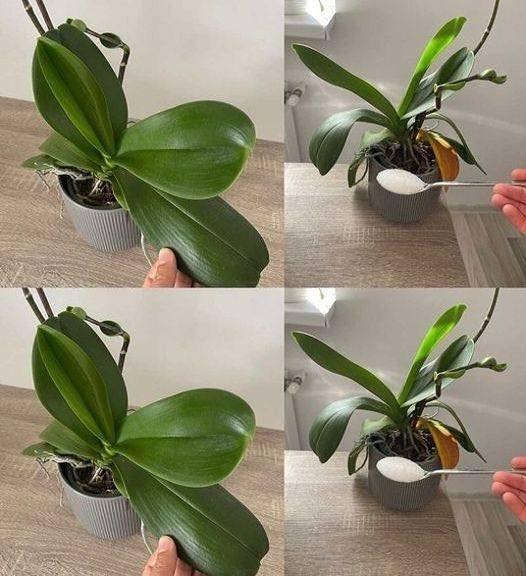
That headline is classic plant-care clickbait.
There is no single “1 tablespoon” fertilizer that makes orchids bloom non-stop. Flowering in orchids depends on light, temperature cycles, and overall plant health—not one magic ingredient.
The plant being referred to is Orchid (often Phalaenopsis in these posts).
What these viral “1 tablespoon” tricks usually are
They often suggest adding things like:
- rice water
- banana peel water
- coffee
- eggshells
- garlic water
These are promoted as “powerful fertilizers,” but:
👉 They are not balanced plant nutrients
👉 They can sometimes cause more harm than good
Why the claim is misleading
❌ “Bloom non-stop” isn’t realistic
Orchids naturally:
- bloom for weeks to months
- then rest before reblooming
They need a cycle, not constant blooming.
❌ Kitchen remedies are inconsistent
- Nutrient levels are unpredictable
- Can lead to root rot, fungus, or salt buildup
- May damage roots over time
What actually helps orchids bloom again
1. Bright indirect light
- Most important factor
- Too little light = no flowers
2. Proper watering
- Let roots dry slightly between watering
- Avoid constant soggy media
3. Temperature difference
- Slightly cooler nights help trigger blooming
4. Balanced orchid fertilizer
- Use a diluted, store-bought orchid fertilizer (e.g., “20-20-20” or orchid-specific mix)
- Typically every 2–4 weeks
5. Healthy roots
- Firm, green/silver roots = good plant
- Rotten roots = no blooms
Bottom line
There is no “1 tablespoon miracle” for Orchid. Blooming depends on light, care, and timing, not a single homemade fertilizer.
If you want, tell me:
- what type of orchid you have
- whether it’s blooming or not
I can give you a simple step-by-step plan to make it rebloom reliably (no gimmicks).
