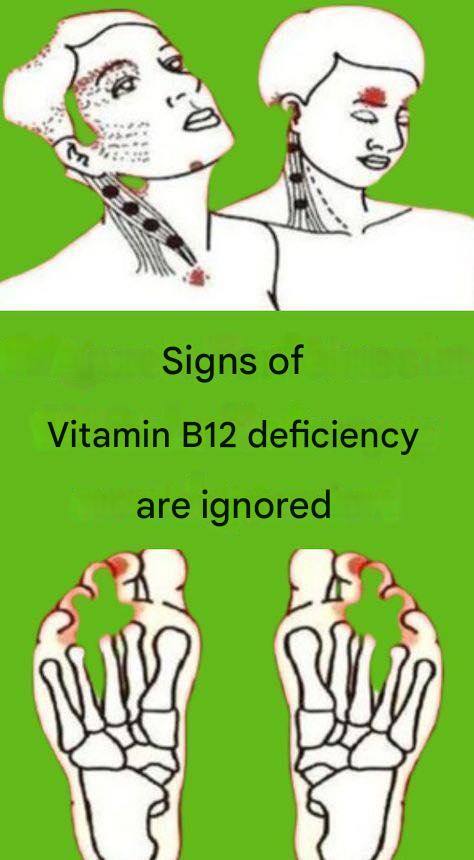
Vitamin B12 deficiency is often missed at first because the symptoms can be gradual, vague, and mistaken for aging or stress. But if it continues, it can affect blood, nerves, and brain function.
Here are the key signs that are commonly ignored:
🧠 Early neurological signs
- Tingling or numbness in hands and feet (“pins and needles”)
- Balance problems or feeling unsteady when walking
- Memory issues or “brain fog”
- Difficulty concentrating
😴 Energy and mood changes
- Persistent fatigue or weakness
- Low mood, irritability, or symptoms resembling depression
- Feeling “slowed down” mentally
🩸 Blood-related symptoms
- Pale skin or mild jaundice (yellowish tint)
- Shortness of breath with mild activity
- Rapid heartbeat or palpitations
👅 Mouth and tongue changes
- Sore, red, or smooth tongue (glossitis)
- Burning sensation in the mouth
- Mouth ulcers in some cases
⚠️ Advanced or long-term deficiency
If untreated, it can lead to:
- More severe nerve damage (can become permanent)
- Difficulty walking
- Cognitive decline or confusion
🧠 Who is at higher risk
- Older adults (reduced absorption)
- Vegetarians or vegans (low dietary intake)
- People with stomach issues (gastritis, celiac disease)
- Long-term use of acid reducers or metformin
🧾 Important reality check
- B12 deficiency is treatable, especially if caught early
- Blood testing is the only reliable way to confirm it
- Supplements or injections are often very effective when needed
🚨 When to get checked
- Ongoing fatigue + tingling or numbness
- Memory or balance changes
- Symptoms that persist without clear cause
Bottom line
Vitamin B12 deficiency is often “ignored” because early signs are subtle—but it can become serious if untreated. The good news is that it’s usually easy to diagnose and treat once identified.
If you want, I can also explain how fast B12 deficiency can be reversed and which foods or supplements work best depending on severity.
