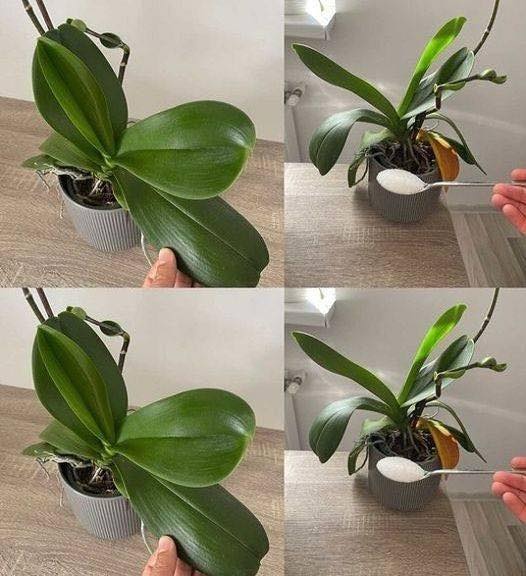
That headline is classic gardening clickbait. There isn’t a single “1 tablespoon” ingredient that makes orchids bloom non-stop. Orchids flower in cycles, and no fertilizer overrides their natural growth pattern.
🌸 Why orchids don’t bloom continuously
Most common orchids like Phalaenopsis orchid:
- Bloom once or twice a year
- Need a rest period between blooms
- Rely more on light and temperature than any one nutrient
🧪 What that “1 tablespoon” usually is
These posts typically refer to things like:
- Rice water
- Banana peel water
- Epsom salt
- Coffee grounds
👉 These may add small nutrients, but:
- They’re unbalanced fertilizers
- Can damage roots or cause rot if overused
- Do not trigger constant blooming
✅ What actually helps orchids bloom
💡 1. Light (most important factor)
- Bright, indirect sunlight
- Too little light = no blooms
🌡️ 2. Temperature difference
- Slight cooler nights (important trigger for reblooming)
💧 3. Proper watering
- Let roots dry slightly between watering
- Avoid soggy roots (common mistake)
🌱 4. Balanced fertilizer
- Use an orchid fertilizer (like 20-20-20)
- Dilute to ¼ strength, feed every 1–2 weeks
🌬️ 5. Airflow and root health
- Orchids need airy bark mix, not regular soil
⚠️ Reality check
- “Non-stop blooming” isn’t natural for orchids
- Over-fertilizing can actually stop flowering
- Healthy orchids bloom predictably, not constantly
🧾 Bottom line
There’s no magic tablespoon fertilizer. Orchids bloom well when their environment is right, not because of a viral kitchen trick.
If you want, tell me what your orchid looks like (leaves, roots, light conditions), and I can help you get it to rebloom step-by-step 🌸
