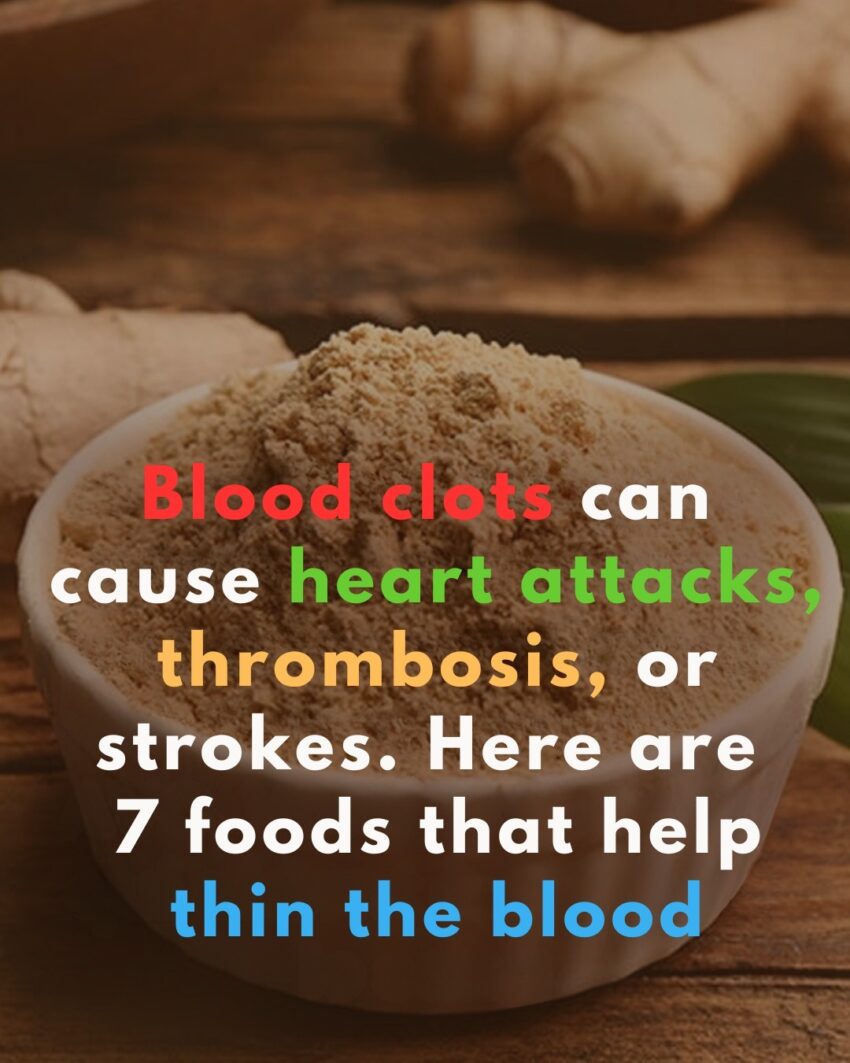
That headline is a bit misleading. Foods don’t act like prescription blood thinners, and calling them “powerful” can give the wrong impression. Some foods can mildly affect platelet function or circulation, but they don’t replace medications like Warfarin or Apixaban.
Here are 7 foods often mentioned, with what they actually do:
1) Garlic
- Contains compounds that may reduce platelet stickiness
- Effect is mild but real in regular diets
2) Ginger
- May slightly affect clotting pathways
- Also helps with inflammation and digestion
3) Turmeric
- Active compound (curcumin) has anti-inflammatory effects
- Mild influence on clotting in higher amounts
4) Fatty fish (like salmon, sardines)
- Rich in omega-3s, which can reduce platelet aggregation
- Good for heart health overall
5) Berries
- Contain salicylate-like compounds (similar concept to aspirin, but much weaker)
- Also support blood vessel health
6) Leafy greens
- Important nuance: high in vitamin K, which actually supports clotting, not thinning
- Still healthy, but interacts with medications like Warfarin
7) Nuts and seeds
- Provide healthy fats that support circulation
- No strong direct “blood thinning” effect
Important safety note
If someone is taking blood thinners (like Warfarin or Apixaban):
- Sudden diet changes (especially vitamin K intake) can affect medication levels
- Large amounts of garlic, ginger, or turmeric may increase bleeding risk
Bottom line
These foods can support heart and circulation health, but they are not true blood thinners and won’t prevent clots on their own.
If you want, I can give you a safe diet plan for people on blood thinners or explain which foods to keep consistent vs limit.
