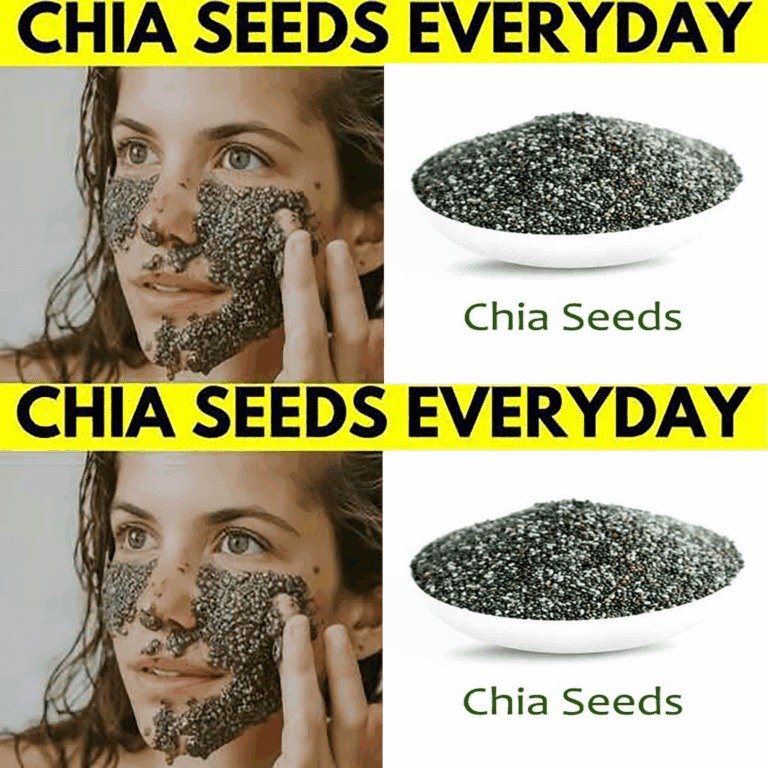
That claim is mostly skincare trend language, not science. Chia seeds (Chia seeds) can be part of a DIY mask, but they are not a proven “best face mask” ingredient or a treatment for skin issues.
What chia seeds actually do on skin
When soaked, chia seeds form a gel because they’re high in:
- Soluble fiber
- Mucilage (gel-like substance)
- Small amounts of omega-3 fats
This means a DIY mask can:
- Feel cooling and soothing
- Temporarily hydrate the skin surface
- Act as a gentle, physical gel barrier
What they do NOT do
Despite viral claims, chia seed masks do not:
- Remove wrinkles
- Tighten sagging skin
- Treat acne or pigmentation
- “Boost collagen” in any meaningful way
- Replace medical or dermatological skincare
Skin changes like these require ingredients that penetrate deeper and act biologically (like retinoids or acids), not food gels sitting on the surface.
Possible downsides
- Can feel sticky or clog pores for some skin types
- Risk of irritation if mixed with harsh DIY additives (lemon, baking soda, etc.)
- No preservation → homemade mixtures can grow bacteria if stored
What actually works better (evidence-based)
For hydration and skin health:
- Hyaluronic acid
- Glycerin-based moisturizers
- Ceramide creams
- Sunscreen (most important anti-aging step)
For acne or texture:
- Salicylic acid
- Benzoyl peroxide
- Retinoids (vitamin A derivatives)
Bottom line
Chia seeds (Chia seeds) can make a soothing DIY gel mask, but they are not a superior or medically effective skincare treatment—just a mild, surface-level hydrator.
If you want, I can show you safe DIY face masks that actually help (oily skin, dry skin, or acne-prone skin) without the myths.
