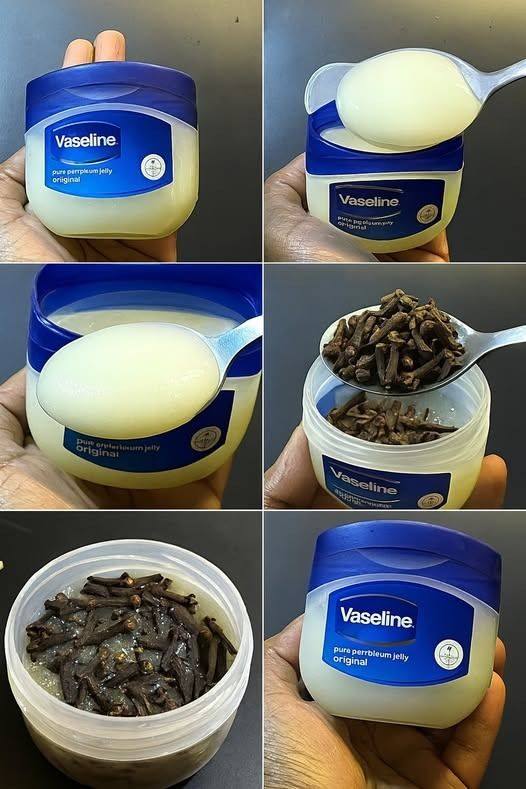
That’s another viral “secret hack” claim, but there’s nothing medically special or hidden about it.
Mixing cloves with petroleum jelly is not a proven treatment for wrinkles, pain, infections, or skin repair—despite how these posts are usually framed.
🌿 What cloves actually do
Cloves contain a compound called eugenol, which can:
- Provide mild numbing (used in some dental pain relief products)
- Have antimicrobial effects in lab settings
- Act as a strong natural irritant if concentrated
But cloves are potent and can irritate skin if not properly diluted.
🧴 What petroleum jelly does
Petroleum jelly is:
- A skin barrier protectant
- Good for sealing in moisture
- Not a healing or medicinal active ingredient
It does not treat skin conditions—it only helps reduce moisture loss.
⚠️ Why the mixture is not a “secret remedy”
- No clinical evidence supports it for wrinkles, pain, or infections
- Clove oil/compounds can cause burning or irritation on skin
- Petroleum jelly simply traps whatever is underneath (good or bad)
- “Natural” does not automatically mean safe or effective
🧠 What it might actually do
- Slight warming or tingling sensation (from clove compounds)
- Temporary moisturized feel (from petroleum jelly)
That’s it—no lasting therapeutic effect.
🚫 What it does NOT do
- Remove wrinkles
- Treat arthritis or joint pain
- Cure infections
- “Regenerate” skin or tissues
🧾 Bottom line
Petroleum jelly mixed with cloves is just a DIY mixture with no proven medical or cosmetic benefits beyond basic moisturization, and it can irritate sensitive skin.
If you want, I can show you safe, dermatologist-backed ways to actually improve skin hydration or reduce wrinkles without risky DIY mixtures 👍
