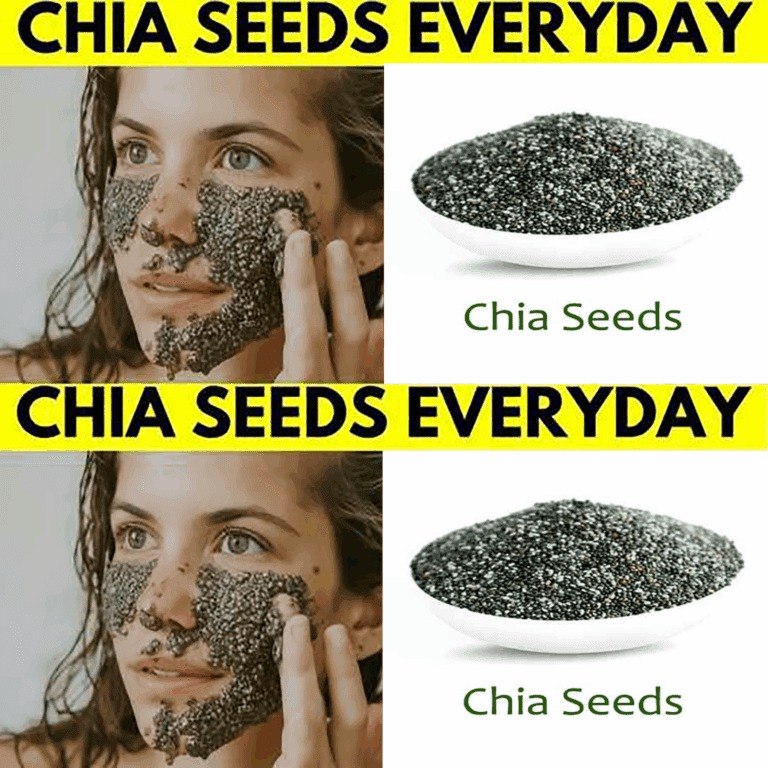
That’s another clickbait skincare claim. Chia seeds (Chia seeds) can be used in DIY masks, but they are not “the best” or a scientifically proven skincare treatment.
What chia seed masks actually do
When soaked, chia seeds form a gel because they contain soluble fiber and mucilage. On the skin, this can:
- Feel cooling and soothing
- Temporarily hydrate the surface
- Act as a gentle, film-forming mask
That’s it—mostly a surface-level effect.
What they do NOT do (despite viral posts)
Chia seed masks do not:
- Remove wrinkles
- Tighten sagging skin
- Treat acne or pigmentation
- “Boost collagen” in the skin
- Replace dermatologist skincare
Those claims are marketing exaggerations.
Possible downsides
- Can feel sticky or clog pores in some people
- Homemade mixtures can spoil quickly (risk of bacteria)
- May irritate sensitive skin depending on what it’s mixed with
What actually works better (evidence-based skincare)
For hydration:
- Hyaluronic acid
- Glycerin-based moisturizers
- Ceramide creams
For anti-aging:
- Sunscreen (most important)
- Retinoids (vitamin A derivatives)
- Vitamin C serums
For acne/texture:
- Salicylic acid
- Benzoyl peroxide
- Dermatology treatments if needed
Bottom line
Chia seeds (Chia seeds) can make a mild, soothing DIY gel mask, but they are not a superior skincare solution—just a basic, temporary hydrator.
If you want, I can give you safe DIY face mask recipes that actually help specific skin types (dry, oily, acne-prone) without the viral myths.
