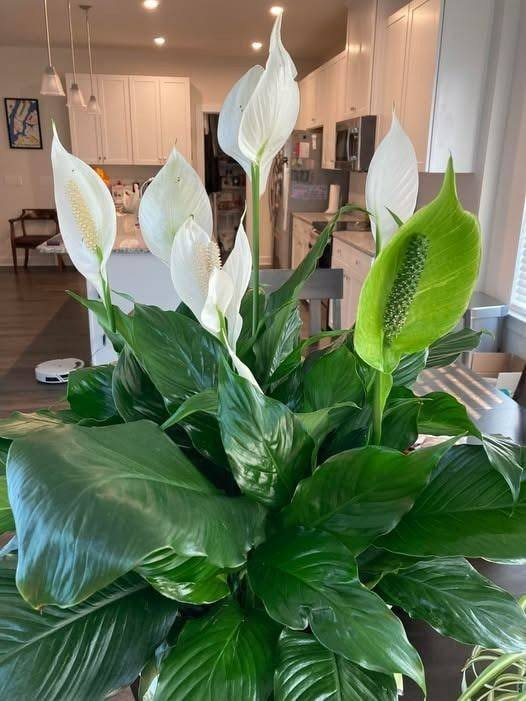
A peace lily (Spathiphyllum) is a popular indoor plant, but it won’t flower just from “special tricks.” It blooms when its basic growing conditions are consistently right.
Here’s what actually makes a difference:
☀️ 1. Light is the #1 factor
- Needs bright, indirect light
- Too little light → lots of leaves, no flowers
- Direct sun → scorched leaves
Best spot: near a window with filtered light (sheer curtain is ideal)
💧 2. Proper watering (not too much, not too little)
- Keep soil slightly moist, not soggy
- Water when top 2–3 cm of soil feels dry
- Poor watering is a common reason for no blooms
🌱 3. Feed lightly (don’t overfertilize)
- Use a balanced houseplant fertilizer in spring/summer
- Too much nitrogen = leafy plant, fewer flowers
- Light feeding once a month is enough
🌡️ 4. Stable environment
- Ideal temperature: 18–27°C (65–80°F)
- Avoid cold drafts and sudden changes
- Moderate humidity helps flowering
✂️ 5. Remove old flowers and leaves
- Cut spent blooms at the base
- Helps plant redirect energy into new growth
🪴 6. Slight root crowding can help
- Peace lilies often bloom better when slightly root-bound
- Don’t rush repotting unless necessary
🚫 Myths to ignore
- “Sugar water,” “magic drops,” or DIY hacks → not effective
- Baking soda or vinegar → can damage soil balance
- No quick trick forces blooming overnight
🌼 Bottom line
A peace lily (Spathiphyllum) flowers more when it gets good light, steady watering, and light feeding—not special hacks or additives.
If you want, I can troubleshoot yours specifically (no blooms, yellow leaves, drooping, etc.) and tell you exactly what’s limiting flowering in your plant.
