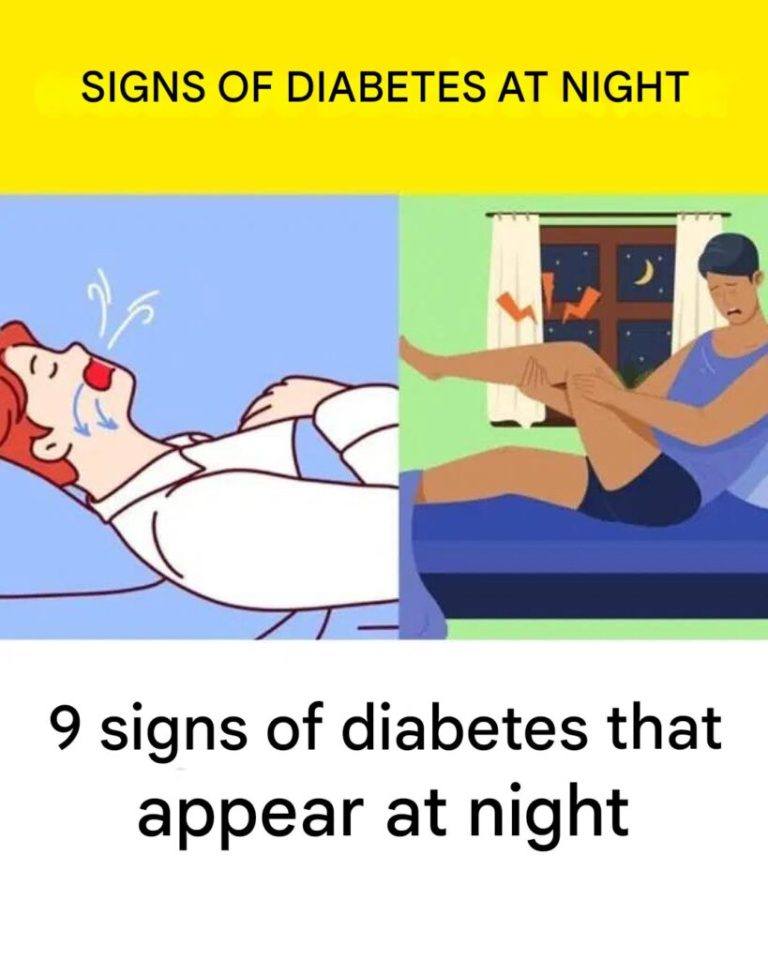
That kind of headline is common online, but it’s a bit misleading. Diabetes doesn’t have “night-only symptoms.” What people often notice at night are effects of blood sugar being too high or too low while sleeping.
Here are 9 signs that can show up at night in people with undiagnosed or poorly controlled diabetes:
1) Waking up frequently to urinate (nocturia)
- High blood sugar makes the kidneys work harder
- Extra glucose pulls water into urine
- You may wake up multiple times at night
2) Excessive thirst at night
- Fluid loss from frequent urination leads to dehydration
- You may wake up needing water often
3) Night sweats
- Can happen if blood sugar drops too low during sleep
- The body releases stress hormones to correct it
4) Restless sleep or insomnia
- Blood sugar swings can disrupt normal sleep cycles
- You may feel “wired” or unable to stay asleep
5) Nighttime hunger
- Low blood sugar episodes can trigger hunger or cravings at night
6) Headaches in the morning
- Can be related to overnight blood sugar fluctuations or dehydration
7) Frequent urination + dry mouth on waking
- Signs of fluid loss overnight
8) Unexplained fatigue the next morning
- Poor sleep quality and unstable glucose levels can leave you tired
9) Tingling or discomfort in feet at night
- Long-term elevated glucose can affect nerves
- This is linked to diabetic neuropathy in some cases
Important context
These symptoms are not specific to diabetes alone. They can also be caused by:
- Drinking too much fluid before bed
- Sleep disorders
- Stress or anxiety
- Urinary tract issues
- Medication side effects
When to get checked
Consider a blood sugar test if you have:
- Frequent nighttime urination
- Excessive thirst
- Unexplained weight change
- Strong family history of diabetes
Simple tests include:
- Fasting glucose
- HbA1c (average blood sugar over 3 months)
Bottom line
Nighttime symptoms can be an early clue of blood sugar problems, but they are not definitive on their own. Diabetes diagnosis always requires testing.
If you want, I can show you a simple “early warning checklist” for prediabetes vs normal aging symptoms, which is where most confusion happens.
