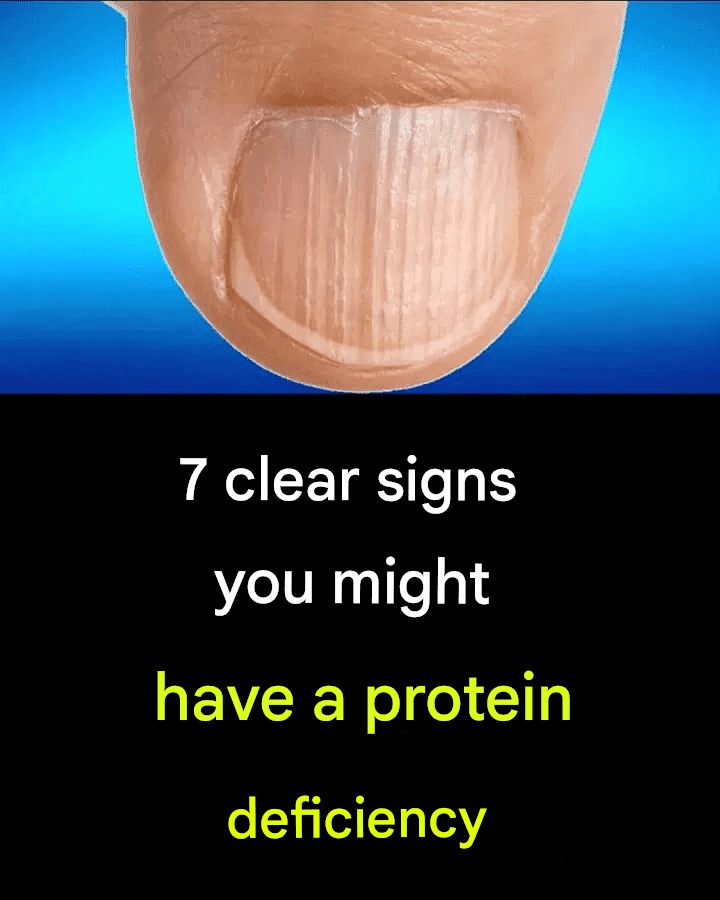
The idea of “7 clear signs of protein deficiency” is often simplified online. True protein deficiency is actually rare in people who eat enough food, but mild shortages or low intake can happen.
Protein is essential for muscles, skin, enzymes, and immunity, and it comes from foods like Egg, meat, dairy, legumes, and nuts.
🧠 First: what protein deficiency really means
Severe protein deficiency (called protein-energy malnutrition) usually occurs in:
- Severe undernutrition
- Chronic illness
- Very restricted diets
In healthy people, symptoms are usually mild and gradual.
⚠️ Possible signs of low protein intake
1. 💪 Muscle weakness or loss
- Feeling weaker than usual
- Loss of muscle tone over time
2. 🧴 Slow healing of wounds
- Cuts or injuries take longer to recover
- Protein is needed for tissue repair
3. 💇 Hair thinning or brittle hair
- Hair may become dry or shed more easily
- Nails may also become weak
4. 😴 Fatigue and low energy
- Feeling tired even after rest
- Protein supports enzyme and hormone production
5. 🦠 Frequent infections
- Weak immune response
- Protein is needed to make antibodies
6. 🦵 Swelling (in severe cases)
- Fluid retention, especially in legs or abdomen
- Seen in serious malnutrition cases
7. 🍽️ Constant hunger or cravings
- Body signals lack of essential nutrients
- Especially cravings for protein-rich foods
⚠️ Important reality check
These symptoms are not specific to protein deficiency alone. They can also be caused by:
- Iron or vitamin deficiencies
- Thyroid issues
- Poor sleep
- Stress or illness
🧠 Bottom line
Protein deficiency is uncommon in most people eating a normal diet. Mild symptoms are often due to overall nutrition imbalance, not just protein alone.
🍽️ Simple prevention
Include regular protein sources like:
- Eggs
- Dairy
- Beans and lentils
- Fish or meat
- Nuts and seeds
If you want, I can estimate how much protein you actually need per day based on age, weight, and activity level.
