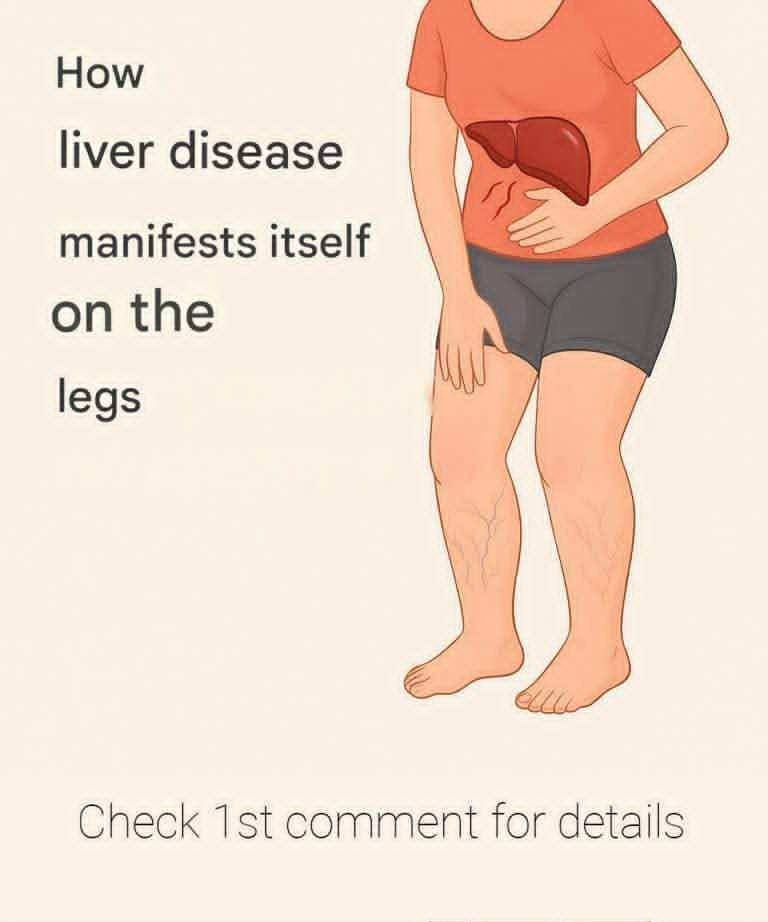
That headline is misleading. Your legs don’t “signal liver distress” in a simple, specific way. Liver problems can affect the whole body, but leg symptoms alone are not a reliable indicator of liver disease.
That said, some leg-related signs can appear in more advanced liver conditions.
🧠 How the liver connects to your legs
The liver helps regulate:
- Fluid balance
- Protein production
- Blood circulation
When it’s significantly impaired, changes can show up in the lower body.
⚠️ Possible leg-related signs (in context)
1. Swelling in legs and ankles (edema)
- Fluid buildup due to low protein (albumin) or pressure changes
- Seen in conditions like Cirrhosis
2. Itchy skin (including legs)
- Bile salt buildup can cause widespread itching
- Often worse at night
3. Muscle cramps
- Electrolyte imbalances in liver disease can trigger cramps
4. Easy bruising on legs
- Liver produces clotting factors
- Damage can lead to bruising more easily
5. Spider veins on legs
- Small, visible blood vessels due to hormonal and vascular changes
🚨 Important reality check
These signs:
- Usually appear with other symptoms, not alone
- Are not specific to liver disease
- Can be caused by circulation issues, diet, medications, or aging
Other more typical liver symptoms
- Yellowing of skin or eyes (jaundice)
- Abdominal swelling
- Fatigue
- Dark urine or pale stools
🧾 Bottom line
Leg symptoms alone don’t diagnose liver problems. They only become meaningful when combined with other signs and proper medical evaluation.
If you want, I can show you early vs late liver warning signs (what actually matters and when to act) so you can separate real risk from internet exaggeration.
