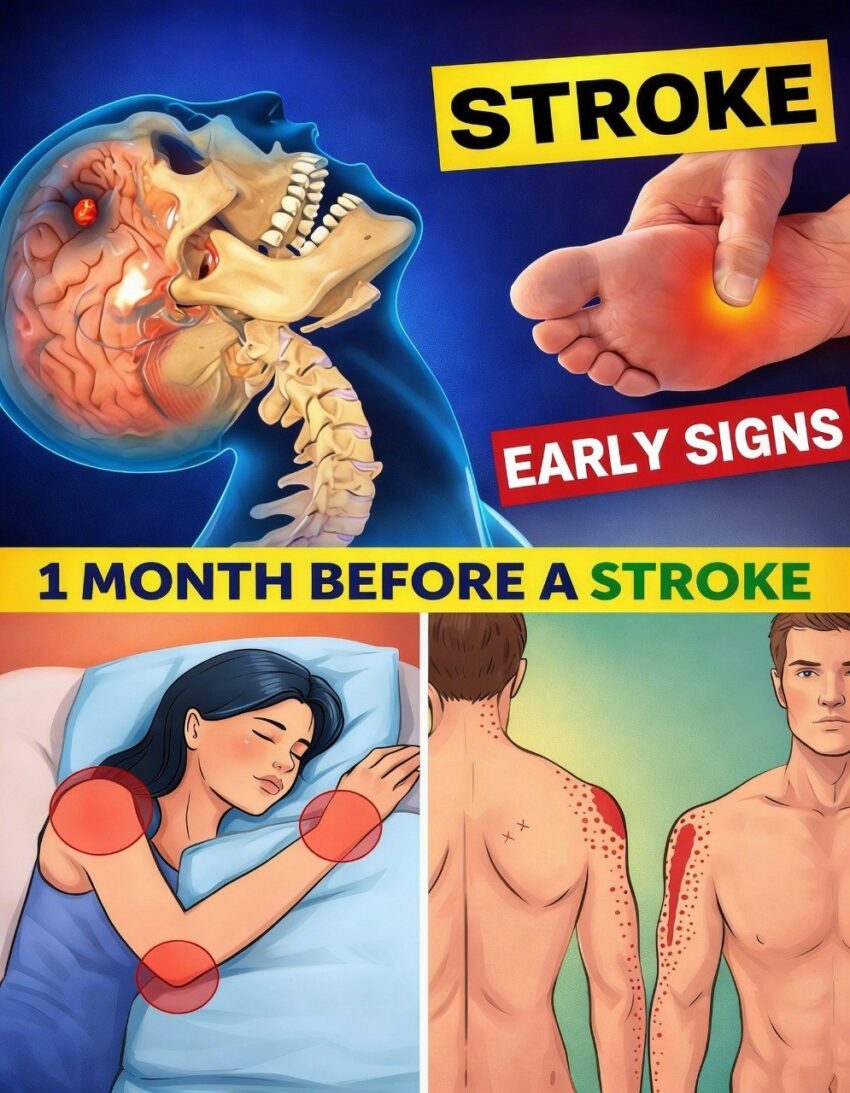
Headlines like that are misleading because a stroke rarely announces itself a full month in advance in a clear, predictable way. A stroke happens when blood flow to part of the brain is suddenly blocked or reduced, most often due to conditions involving ischemic stroke or sometimes bleeding in the brain.
What can happen before a stroke (sometimes called “warning events”)
Some people experience a transient ischemic attack (TIA)—a short-lived “mini-stroke” where symptoms come and go. These can occur hours, days, or sometimes weeks before a full stroke, but not always.
Possible warning symptoms include:
- Sudden weakness or numbness in face, arm, or leg (often one side)
- Brief trouble speaking or understanding speech
- Temporary vision loss or double vision
- Sudden dizziness or loss of balance
- Severe, unusual headache (more common in bleeding-related strokes)
These symptoms usually last minutes to a few hours and then disappear in a TIA—but they are a medical emergency signal, not something to ignore.
About “8 warning signs one month before”
There is no reliable medical list of symptoms that predict a stroke exactly one month in advance. Long-term risk factors exist, but not a countdown of symptoms.
Real ways to reduce stroke risk (what actually works)
Doctors focus on controlling risk factors:
- Keep blood pressure under control
- Manage diabetes and cholesterol
- Stop smoking
- Stay physically active
- Maintain a healthy weight
- Limit alcohol intake
- Treat heart conditions like atrial fibrillation
- Eat a balanced diet (low salt, more fruits/vegetables)
The most important takeaway
Stroke warning signs are usually sudden, not gradual over a month. The real emergency is recognizing FAST:
- Face drooping
- Arm weakness
- Speech difficulty
- Time to call emergency services immediately
Bottom line
Be cautious with “8 signs months before” articles—they mix real emergency symptoms with speculation. What truly matters is recognizing sudden neurological changes and acting fast.
If you want, I can explain how to tell the difference between a TIA, migraine, and stroke symptoms—they’re often confused.
