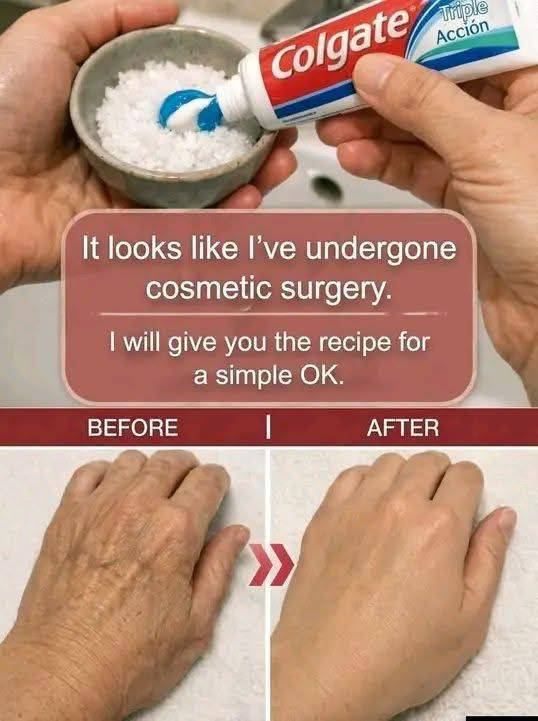
Short answer: it doesn’t—despite what viral posts claim.
The idea that toothpaste can “naturally improve age spots and wrinkles” is a skincare myth with no medical support. In fact, putting toothpaste on your skin can often do the opposite of what you want.
Why this claim exists
Toothpaste sometimes feels “tight” or “drying” on the skin because it contains ingredients like:
- Baking soda or abrasives
- Menthol or mint (cooling sensation)
- Hydrogen peroxide (in some formulas)
That temporary tightening effect can look like smoother skin for a few minutes, which is where the myth comes from.
What actually happens to your skin
Skin is sensitive, and toothpaste is formulated for teeth—not facial tissue. On skin it can:
- Cause irritation or redness
- Disrupt the skin barrier (dryness, peeling)
- Trigger chemical burns or dermatitis in some people
- Make pigmentation issues worse over time due to inflammation
So instead of improving age spots or wrinkles, it can actually increase irritation-related darkening in some cases.
About age spots and wrinkles
- Age spots (sun-induced pigmentation, often called solar lentigines) form due to UV damage over time.
- Wrinkles are caused by collagen loss, aging, and sun exposure.
Neither condition can be safely or effectively treated with toothpaste.
What actually helps
If someone wants real improvement in:
- Age spots: sunscreen, vitamin C serums, retinoids, professional treatments (like laser or chemical peels)
- Wrinkles: retinoids, moisturizers with peptides/hyaluronic acid, sun protection, and sometimes dermatological procedures
Bottom line
Toothpaste is for teeth, not skin. Any “benefit” is temporary and cosmetic illusion, while the risk of irritation is real.
If you want, I can break down cheap, actually effective skincare options for pigmentation and wrinkles that are widely used and evidence-based.
