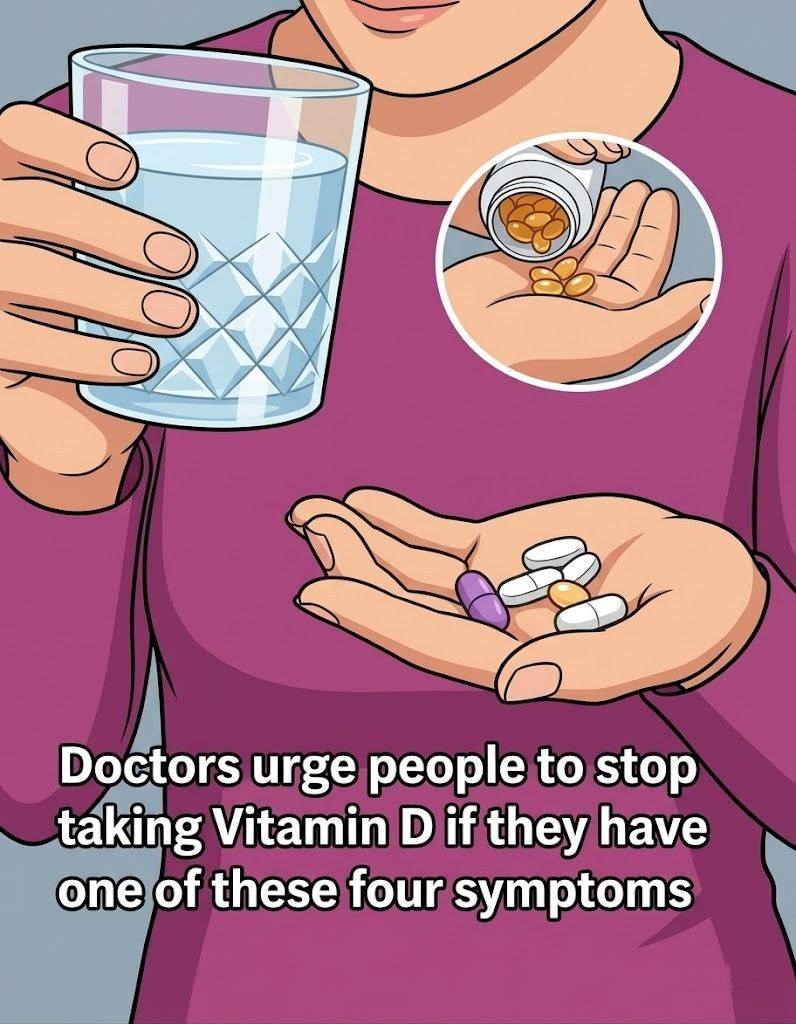
That headline is sensationalized and misleading. There is no general medical rule saying everyone should “stop vitamin D immediately” based on a random set of 4 symptoms.
What does exist is a real (but uncommon) condition called vitamin D toxicity, medically known as hypervitaminosis D, which can lead to high calcium levels in the blood.
🧠 What vitamin D toxicity actually is
With very high doses of Vitamin D (Cholecalciferol) taken over time (usually supplements, not food or sun exposure), calcium can build up and cause problems.
⚠️ Real symptoms doctors watch for (when toxicity occurs)
If vitamin D levels become dangerously high, symptoms may include:
1. Nausea, vomiting, or poor appetite
Often due to elevated calcium levels.
2. Excessive thirst and frequent urination
Your kidneys try to flush out extra calcium.
3. Weakness, fatigue, or muscle aches
From disrupted electrolyte balance.
4. Confusion or brain fog (in severe cases)
Usually in advanced or untreated toxicity.
🚨 Important reality check
- These symptoms are not specific to vitamin D alone
- They usually appear only with very high, long-term overdose, not normal use
- Most people taking standard doses (like 400–2000 IU/day) are safe
Toxicity is rare and preventable with correct dosing and sometimes blood tests.
🧾 When you should actually be concerned
You should speak to a doctor if:
- You are taking high-dose vitamin D (e.g., 10,000 IU+ daily for long periods)
- You also take calcium supplements
- You have kidney disease (Chronic kidney disease)
- You develop persistent symptoms like nausea, confusion, or unusual thirst
❗ Why these posts are misleading
- They mix real toxicity symptoms with fear-based framing
- They ignore dosage and context (the most important factor)
- They imply immediate danger for normal supplement users, which is false
🧾 Bottom line
Vitamin D is generally safe and widely recommended. The real risk is over-supplementation over time, not normal daily use. You should never stop it suddenly based on viral symptom lists without medical advice.
If you want, I can tell you safe daily vitamin D doses by age and condition, or how to know if your level is actually too high or too low.
