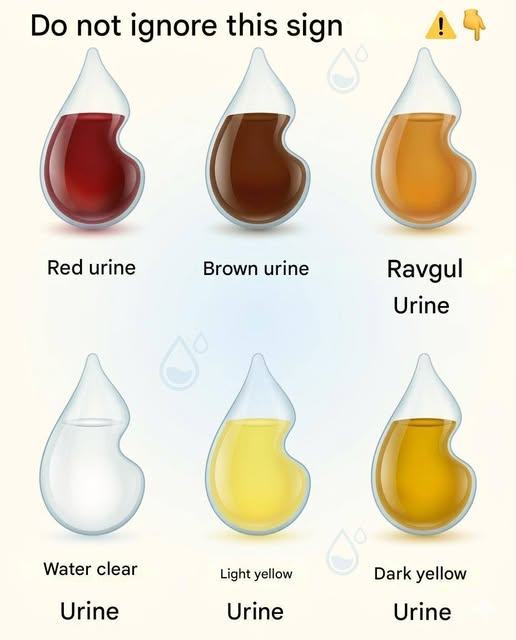
Urine color can give useful clues about hydration and certain health issues, but it’s not a precise diagnostic tool on its own. Diet, medications, and vitamins can all change color too.
Here’s a practical guide to what different colors can mean:
🚽 Urine color and what it may indicate
💧 Pale yellow to light straw (ideal)
- Usually a sign of good hydration
- This is the “target” range for most people
🚰 Completely clear
- You may be overhydrated
- Not dangerous in most cases, but you might be drinking more water than needed
🌕 Dark yellow
- Mild dehydration
- Common if you haven’t had enough fluids
🟠 Amber or orange
- Dehydration (more significant)
- Can also come from:
- Certain medications
- Vitamin supplements (especially B vitamins)
🍎 Pink or red
- Could be from foods (beetroot, berries)
- Or blood in urine, which needs attention
- Possible causes include infection, stones, or other conditions
🟤 Brown or cola-colored
- Severe dehydration
- Possible liver-related issues (e.g., Liver disease)
- Muscle breakdown in rare cases
🟢 Green or blue (rare)
- Usually from:
- Food dyes
- Certain medications
- Occasionally linked to infections
🧊 Cloudy or foamy
- Cloudy: may suggest infection or crystals
- Foamy: sometimes linked to protein in urine (can relate to kidney issues)
⚠️ When to take it seriously
See a doctor if you notice:
- Red or brown urine without a clear food cause
- Persistent dark urine despite good hydration
- Pain, burning, or strong odor (possible infection)
- Foamy urine that doesn’t go away
- Symptoms like fever or back pain (possible Urinary tract infection or kidney issue)
🧠 Key takeaway
Urine color is a quick hydration check, not a diagnosis. One unusual color once is usually harmless—but persistent or unexplained changes should be checked.
If you want, you can describe your specific urine color and symptoms, and I’ll help you narrow down what’s most likely.
